Assisted Living Mexico, Mexico Retirement, Mexico Senior Living, Senior Care Mexico, Senior Living Mexico

Mexico’s Future as a Senior Living and Senior Care Destination for North Americans: Opportunities and Realities from CIAMAR 2025

We live in an aging universe, a universe where older adults live longer than ever before. 

The need for housing and care, especially affordable housing and care, is growing in all three North American nations – Canada, Mexico, and the U.S. (See the Statistics section for expected growth by 2030 and 2050 at the base of this review).

In 2003, when working at a luxury senior residence in Rancho Mirage, CA, it was evident that healthcare affordability for U.S. older adults would become a challenge or become completely cost prohibitive, especially if dementia was part of the equation.

This revelation ignited my desire to explore international options.

I started investigating Ecuador, Mexico, and other destinations for medical care, long-term care, and end-of-life care, subjects that remain dear to me and those I serve.

My hands-on experience as a Mexico senior living consultant conducting due diligence over a period of 11 years in 18 Mexican states (there are 31. The Federal District of Mexico City makes 32) has kept me engaged and open to what’s happening on the senior living front. An excellent place for me to learn more was as a speaker and guest at this year’s CIAMAR Wellness and Senior Living Investment Summit 50+ to 80, a conference produced by Javier Govi.

Govi is a “nearetiring” proselytizer and real estate entrepreneur who has believed in the growth of senior living in Mexico for American, Canadian, and Mexican retirees for more than a decade. His platform is focused on growth with corporate players from Canada, Mexico, Spain, the U.S., and other countries in Latin America.

My interest is in all sectors including smaller residences and intimate communities with sustainable futures.

Who attended CIAMAR 2025?   

Between 150 to 200 persons attended the summit, gently modelled after NIC (National Investment Center) conferences in the U.S. with 1500 to 3,000 participants. The event was held at the Hotel Marquis Reforma in Mexico City.

Architects, bankers, real estate developers, senior living operators, tourism industry execs, one real estate appraiser, and entrepreneurs from around Mexico – Baja California Norte y Sur (Tijuana, Cabo San Lucas), Cancun, Cuernavaca, Leon, Merida, Mexico City, Puebla, Queretaro – and from other countries – Argentina, Colombia, Costa Rica, (Germany via Zoom), Panama, Spain, were present.

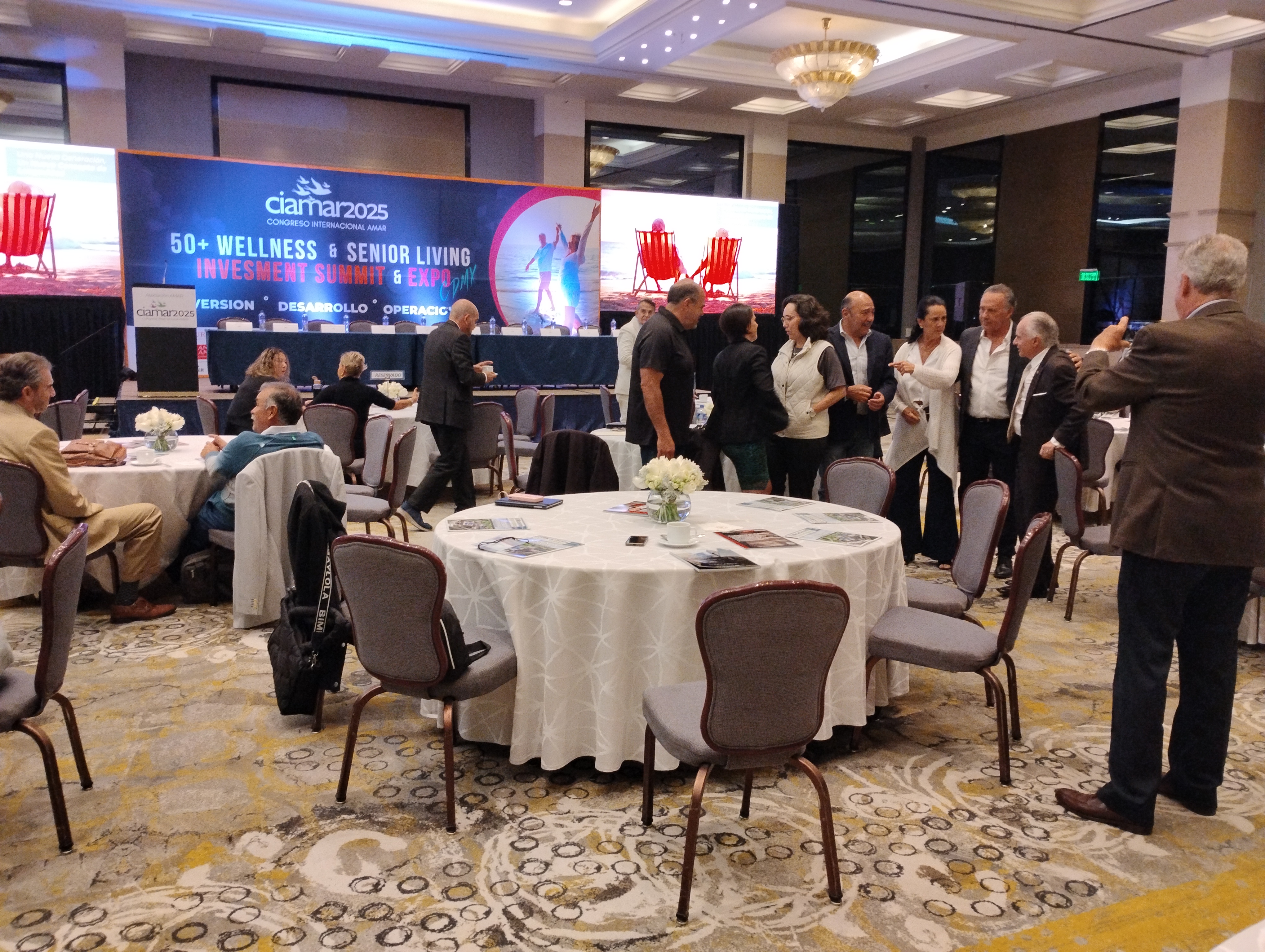
Below is a photo from the first day of the summit, almost an hour before we began.

What was on the agenda and who were the speakers addressing the opportunities?

https://ciamar.odoo.com/en/programa

https://ciamar.odoo.com/en/ponentes

Speakers from Latin America, mostly from Mexico, brought unique projects and perspectives, some are outlined further below.  

These Latin American entrepreneurs see opportunity in attracting Americans, Canadians, and Europeans. One of the speakers referred to the current wave of this cohort as “el tsunami blanco”, the “white tsunami”. (An interesting comment as some expats in Mexico have Afro, Asian, and Latino heritage).

Latin American entrepreneurs are also focused on culturally compatible senior living for their own populations. Is there a way to meld the different cultures? This is a subject that remains open for discussion.

Some Mexican senior living homes thrive on hosting expats as their primary residents.

Despite the perception outside Mexico that Mexican elders are taken care of at home, many still are, there are senior living enclaves for Mexicans around the country, though far fewer than with Mexico’s neighbors north of the border. 31% of 11 million Mexican homes have at least one older adult (INEGI 2020).

According to INEGI (Mexico’s National Institute of Statistics and Geography, 2020) there are approximately 1200 senior living residences including assisted living/nursing care/memory care (often combined into one residence unlike American and Canadian systems). In 2017 there were an estimated 800.

The numbers for Mexico do not include independent living/active adult enclaves but do include corporate senior living, smaller private pay residences, non-profits often run by nurse nuns, and government homes. These numbers fluctuate as numerous small start-ups often close.

In Canada there are approximately 2,076 assisted living/supportive living/retirement residences according to Science Direct. Another source says Canada has 571 assisted living residences. (See Reference section below). In the U.S. there are approximately 32,000 assisted living communities with a total of over one million beds.

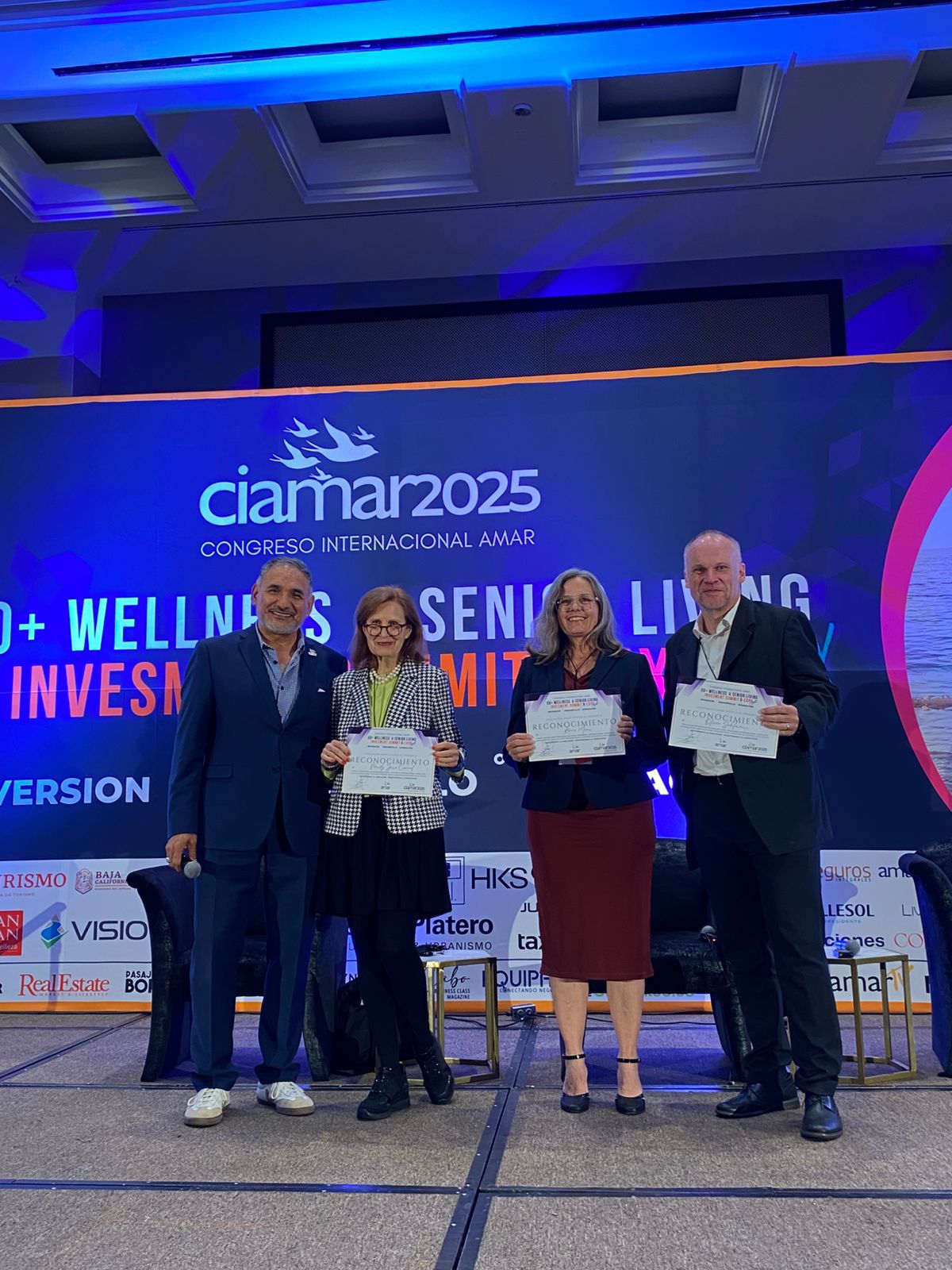
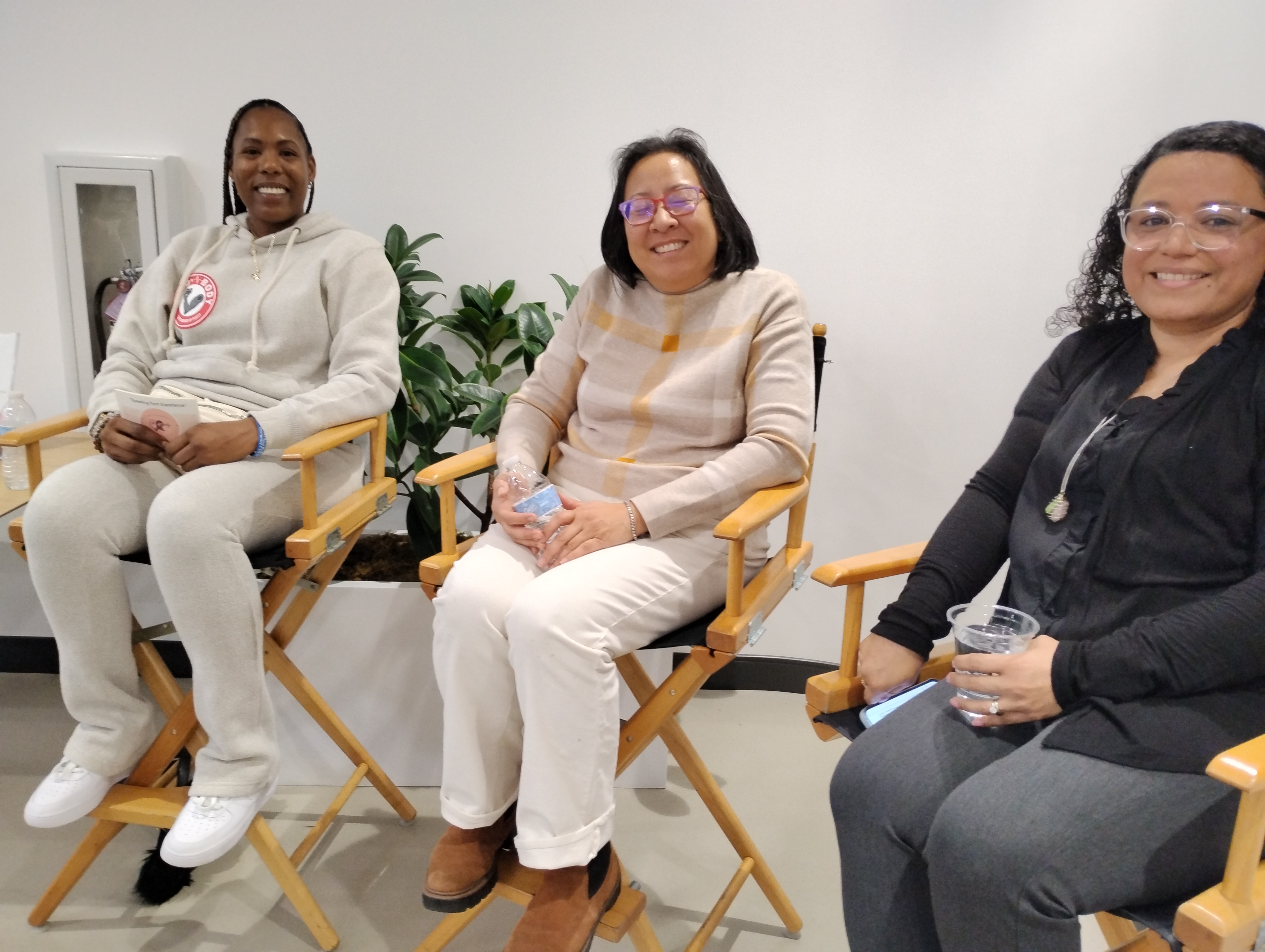
The “Bucket List” panel below with Javier Govi CIAMAR founder/producer, Wendy Jane Carrel, Kerri Moon, and Oliver Sahlmann

Three of us were invited to address the following question:

Who are the Americans, Canadians, and other foreigners considering Mexico for retirement and senior care?

We began our team presentation with a quick slide show of photos showing foreign residents in Mexico ages 60 to 100, couples and solo agers of diverse backgrounds (a growing number of Mexican Americans included), and those with diverse interests and preferences from no frills to resort-like settings.

Kerri Moon, an American entrepreneur who built one community at Lake Chapala and collaborated on the growth of the Namaste Community (another Lake Chapala expat community), pointed out, and we all agree, “the availability of caring workers who come from intergenerational households and are accustomed to respecting their elders could ensure superior staff-to-resident ratios giving Mexican senior housing a tremendous opportunity to succeed.”

Moon is currently spearheading a group seeking investors for a Memory Care Village at Lake Chapala. Find her at https://www.facebook.com/RetireInternationally/

Oliver Sahlmann, a business coach, former Volkswagen Mexico executive, and Mexico resident for 20+ years, shared about German retirees in Mexico.  “They come mostly for the sun, and, in winter months.” He presented some charming cultural stories to give the audience a feeling for the German mindset.

The main points of my contribution were the diversity of ages, backgrounds, and interests, that no one plan fits all, and that most retirees from Canada and the U.S. prefer to Age in Place in communities with other expats. Fewer prefer living among locals but those who do often thrive.

The migration of Americans and Canadians to Mexico for retirement and senior care is not new, it has existed for decades. Numbers increased noticeably since 2008 (U.S. economic challenges), COVID, and as mentioned above – the realization that we are living longer and there may not be enough funds for retirement and healthcare. The U.S. does not have universal healthcare, Canada and Mexico do to varying degrees.

For older adults who have long-term care insurance and are independently wealthy healthcare is not an issue. But the reality is, even with U.S. Medicare, and continued rumors of cuts for Medicare and Medicare Advantage programs, some older adults are seeking alternatives and solutions in other U.S. states or other countries.

Here are some highlights from CIAMAR 2025 sharing pride of Mexico, sustainable projects, unique visions, plus mention of notable vendor/summit supporters:

Javier Govi invited attendees to invest in the future of senior living in Mexico and LatAm, invest in the concept of Near Retiring (bringing Americans and Canadians to Mexico), consider Pueblo Magicos for aging (see Reference section below for explanation of this government initiative for magical villages), and most of all offer dignity, quality of life, and exceptional healthcare. Govi is the author of Nearetiring: Baby Boomers, Snowbirds, and Summerbirds, a Great Opportunity for Mexico and Latin America in Spanish.

Mac Kroupensky – Mac is a thought leader who teaches corporations, companies, and government how to create innovative change and motivate people and teams. For 10 years he taught at IPADE, Mexico’s equivalent of the Harvard Business School or France’s INSEAD. “To be a great leader you must be a great human being,” is his motto.

Kroupensky has a super enthusiastic presence. He regaled the audience by asking them to imagine an ideal retirement place – a city of 150,000 with medical infrastructure, security, and new technology. He pointed to Sofia, Bulgaria’s thriving tech and arts scene, a city of old and new. Most of all, that perfect retirement place would offer the best of humanity, people who care. He then added, the Mexico/LatAm Senior Living Investment Summit would offer invaluable expertise and talent. He is right, it did.

https://kroupensky.com/quien-es-mac/

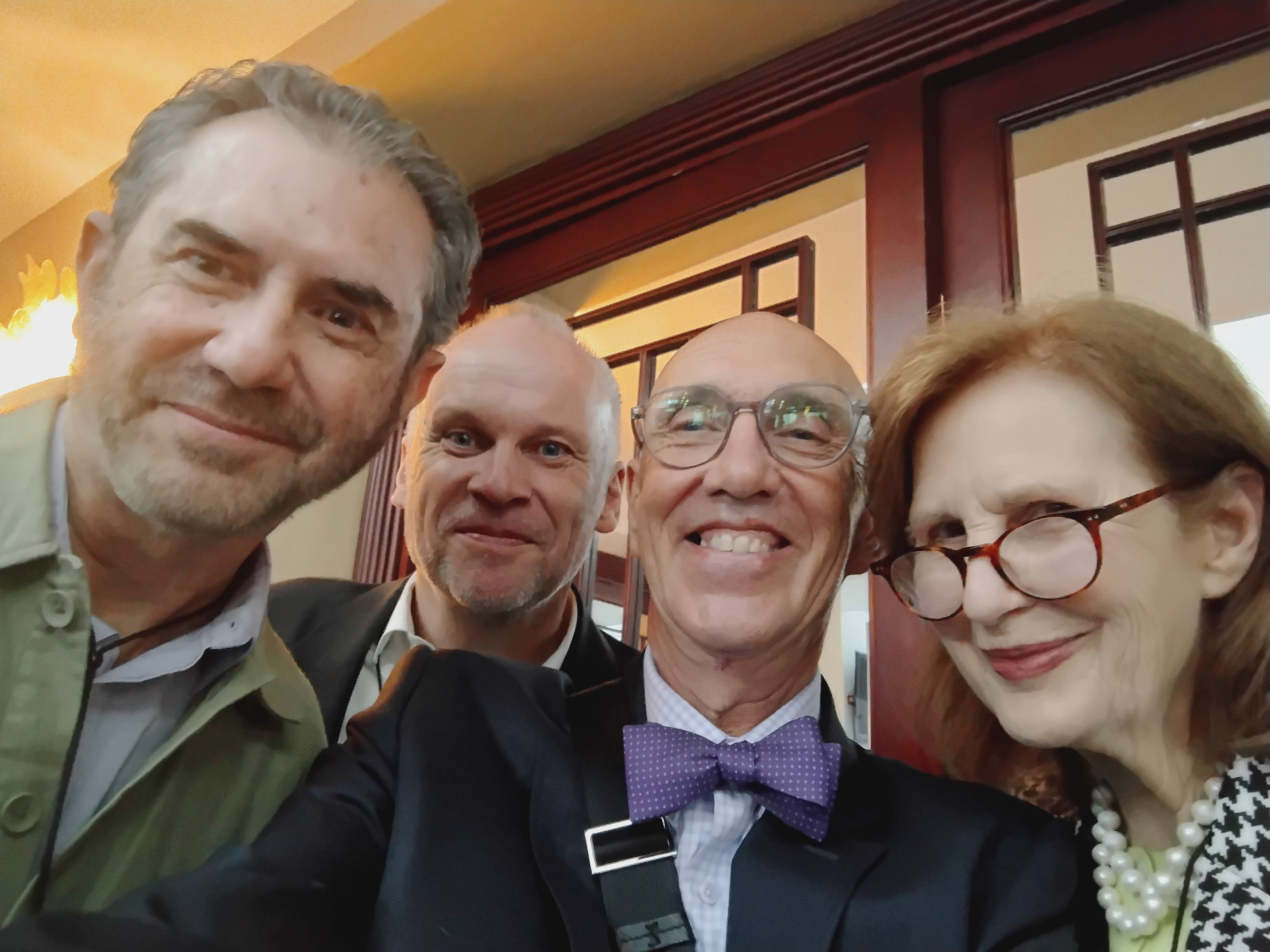
In the photo below: Rafael Garcia Turban international developer, Oliver Sahlmann, Mac Kroupensky, Wendy Jane Carrel at CIAMAR Mexico and LatAm Senior LIving Investment Summit 2025

Antonio Gonzalez-Quiros F. , Director of Ballesol Mexico, was the keynote speaker. Ballesol is a Spanish corporation that for 40 years has developed 55+ resorts, residential apartments, and assisted living. Ballesol has assisted living facilities in Queretaro and Mexico City. Note: Spaniards and Latin Americans investing in senior living have much in common – culture, language, law, and a familiar way of doing business.

Ernesto Oechlar former banker, former CEO of a family-owned senior living residence, advocate for holistic senior living, organic food, and positive mind set. He is currently a consultant for Neuro Change Solutions (NCS), a global network of corporate consultants trained by Dr. Joe Dispenza teaching how to apply the neuroscience of change to increase employee engagement, collaboration, and productivity for business results. Delightful to converse with him and with Mac Kroupensky about differences of perception within cultures.

Marta Parra, Co-Founder and Co-Director of Virai Arquitectura, Spain.  She was one of the last speakers and I wish more attendees could have listened to her enlightened presentation about creating accessible spaces and person-centered memory care with the energy of light, located in nature, and more. She is a pioneer in neuroarchitecture and sustainability for hospitals and senior living residences in Spain, Africa, and Latin America. Her slides and presentation were excellent. For more information see https://www.virai.eu/

Architect Carlos Sanchez of www.gomezplatero.com was a pleasure to listen to and learn from. He studied architecture in Torino, Italy and has worked on senior living projects in Medellín, Colombia and in Uruguay. 

Mario López is the founderof Taxáre. He is a real estate appraiser, consultant and enthusiastic investment project manager for real estate businesses. You can find him as “Mario El Valuador” on Instagram, Tik Tok and his podcast Un Express de Real Estate on You Tube @soymariolopez. He showed us drawings of an eye-catching urban city design for Tijuana intended for retirees and others – modern towers, gated, secure, flat and walkable, alongside the Pacific Ocean, with sustainable architecture, lots of gardens and amenities. If and when such a project is manifested, I can see folks with this concept as their aging in place vision filling it up fast. Based on my several due diligence visits to Tijuana, the city would benefit from a project such as this.

Juan Pablo Payró an Architect/Masterplanner/Designer/Developer shared about Agrihoods and Wellness Community projects in Queretaro, San Miguel de Allende, Holbox, Bacalar, and Los Cabos. He is a co-developer with Javier Govi’s Grupo AMAR. I contacted him to share photos or a website but have yet to receive a reply.

Salvador Rivas, an articulate, cultivated British-Mexican architect, has worked on prestigious international projects. His web site is www.srivasarchitects.com . I contacted him for information related to senior living projects but have yet to receive a reply.

There were many worthy presenters. Apologies to those not mentioned.

A special shout out to Jose Manuel Diez for his elegant, gracious energy as Master of Ceremonies and to the amazing AMAR and CIAMAR support team who produced this event.

Attendees I also appreciated meeting:

Juan Jose Perez Rifel shared with me an appealing project for Queretaro, one of my favorite Mexican cities. He is with www.st-austin.mx (see concept photos at the website). As I understand St. Austin owns the land. The first project is an eco-sustainable hospital which will serve as the property anchor with plans to expand to a medical district with doctor’s offices, a senior living residence (no precise details), a commercial center, gardens, and more. I am eager to see it when it is built.

Visiting from Lake Chapala was Jorge Garcia de Leon who is head of operations at Rancho Salud Village, see www.rancholasaludvillage.com or their Facebook page.  His father-in-law owns the land in this eco-friendly, holistic, sustainable, multicultural, co-housing community of homes for Aging in Place. I have witnessed the growth over 11 years from two homes to a plan for 21 and eventually 30+ with pool, vegetable and herb gardens, and more. I am a fan of Jaime Navarro, his lady Sara, and their passion for healthy, independent living.

Roberto Madruga Avensa of Mexico City has “four legally clear parcels for development” for an Aging in Place/Wellness project in the Pueblo Magico (magical village) of Ixtapan de la Sal. The project is known as Reserva Reforma and there is no website yet. Sr Madruga envisions a completely flat, walkable community with local healthcare within five minutes, a hospital you would be flown to by air ambulance if needed, living spaces with doors, floors, and more following the 150 Residencial Universal Living Design standards. Sr. Madruga’s wife is a geriatrician. They have travelled to Italy, Spain, and Switzerland to look at senior care. The Reserva Reforma concept would appeal to American and Canadian couples and solo agers if and when such a project is built may be a few years from now.  In any event, the vision is a match with many folks who wish to move to Mexico, Baby Boomers especially.

Alejandro del Rio of Leon, Mexico.  Family property on many acres in nature with a villa, a large home, lots of green trees, brick walls. It has been or is being converted into a senior living residence. See https://www.plenityland.com/ for photos and contact information.

Nelly Vasquez Sanchez of Gravasa Immobiliaria in Puebla and Oaxaca is a real estate agent and a newbie to the senior living world.  She shared with me she attended the conference because she wishes to learn how to provide for expat residents. She paid attention to each presentation. She was a joy to get to know as she represents a younger generation that has an interest in aging. https://www.facebook.com/igruvasa/?locale=en_GB

Mauricio de la Cerda, VP Growth for www.angela.care was at a vendor table sharing how to receive pills in a pill pack organized by day and time (breakfast, lunch, dinner), delivered to you at home. Angela Care works in collaboration with Amazon Pharmacy.

Vendor Roberto Sanchez of Gerflor.com, a French flooring company, shared my kind of waterproof, antimicrobial, soft to fall on, quiet, no glue, fast installation flooring. I wish this flooring was mandatory in Mexican residences as injuries from falls could be less severe. Most residences have slippery tile flooring. I also had a secret desire that the Marquis Reforma Hotel where the summit was held would remove its marble floors. We were there in rainy season!! Here is the GerflorUSA website: https://www.gerflorusa.com/

Where is the money?

With the talent I witnessed and all the possibilities shown on multimedia around the conference center (some visually inviting, stunning in fact), I was mystified. I wondered why so many worthy older adult projects presented at the summit have not been built.

What has prevented architects, developers and others from manifesting their visions?

If I had not been breathless and a bit under the weather, nor missed the presentation that may have explained more “Where is the Money?” I may have learned more. Kudos to CIAMAR for the discussion.

So, I canvassed Mexican speakers and attendees and asked if they would please share what they see as obstacles.

The answers included government bureaucracy (heard this several times, heard this the most), challenging local laws requiring 2-3 years for permission to build, issues with land permits, financing, construction, and “voluntad” or will power and motivation for investment in this sector.

There is a growing venture capital market in Mexico of local and international investors. Most of the capital is being invested in technology, especially fintech.

Many architects and developers in senior living are essentially like movie producers. They create an idea, develop it, and shop it from place to place for financing.

It requires remarkable resilience and will power to be a Mexican entrepreneur in the senior living sector.

CIAMAR 2026 will focus on technology in senior living.

Summary

The need for senior living – housing and care, especially affordable housing and care, is growing in all three North American nations – Canada, Mexico, and the U.S.

For several decades Mexico has been a destination for Americans and Canadians. Now, with dwindling retirement funds, healthcare plans that are not flexible, and overall rising costs for housing and healthcare, the opportunity for more development is evident.

Senior living south of the U.S. border may be a continuing retirement trend.

Growth is slow as developments are often stalled by government bureaucracy, land permit issues, the ability to raise capital, and more.

Some Mexican developers are focusing on generations age 50+, especially those who are active and fit, seeking affordable luxury and a wellness environment.

© All rights reserved. Wendy Jane Carrel 2025   

Wendy Jane Carrel is a trusted older adult advocate and consultant who has hands-on experience with healthcare systems, retirement options, senior living residences, and wellness programs in Mexico, Ecuador, and other countries. She provides informed, culturally sensitive transition guidance and curated options for families and elders moving to Latin America. Her website is http://www.WellnessShepherd.com

Resources:

https://www.sciencedirect.com/science/article/abs/pii/S152586102200559X# Canadian long-term care statistics

https://bytescraper.com/b2b-database/list-of-assisted-living-facilities-in-canada

https://www12.statcan.gc.ca/census-recensement/2011/as-sa/98-312-x/98-312-x2011003_4-eng.cfm Canadian housing, dwelling statistics

https://www.technavio.com/report/senior-living-market-analysis an overview of U.S. market analysis growth for future senior living

https://dspace.mit.edu/handle/1721.1/108882# MIT study on real estate development opportunities for senior living in Mexico.  2017 2017 study on opportunities for senior living in Mexico

https://www.definitivehc.com/resources/healthcare-insights/assisted-living-facilities-us U.S. statistics for assisted living residences

https://en.wikipedia.org/wiki/Pueblos_M%C3%A1gicos Pueblos Magicos are part of a Mexican government initiative to create interest in its small towns with historical or magical charm.

I wrote the article below in 2016, it is dated in part.

Statistics

Statistics for burgeoning population growth in North America:

Canada – 7.6 million older adults representing 18.9% of the population according to Statistics Canada 2024. Statistics project seniors could make up 23% of the population by 2030 and nearly 26% by 2068

Mexico – 10.6 million adults over age 65 according to INEGI the Mexican Statistics Bureau, and Statistica.com. AARP International suggests older Mexican adults will represent 30% of the population by 2050 an increase of 277%.

USA – The number of Americans 65 and older is projected to increase from 58 million in 2022 to 82 million by 2050 (a 42% increase) according to a 2024 study by the Population Resources Bureau.

Assisted Living Mexico, CCRC's in Mexico, Expats Mexico, Health & Wellness Mexico, International Retirement, Life Plan Communities Mexico, Mexico Senior Living

Senior Living Investment Summit Mexico and Latin America September 3-4, 2025

I am on my way to Mexico City to speak at a Senior Living Summit being held at the Hotel Marquis Reforma September 3-4, 2025 about the growing need to create evolved, affordable, holistic enclaves of well-being for older adults to age in place, age in community, and more, a subject on my mind since 2003.

Quick history:

In 2003, when serving as nighttime administrator and day time admissions and marketing officer at an exemplary (still is) memory care campus in Rancho Mirage, California, (thank you owner and mentor Floyd), the writing was on the wall.

Unless you are blessed with excellent health your entire life and have experienced no accidents, in the U.S. the cost of adequate long-term care at home or in a residence, could easily require up to $1 million per person with 2025 fees and pricing. With long-term care insurance at several hundred dollars a month, only 80% of costs would be covered.

This awakening was the impetus to look internationally for more affordable options with quality care and medical infrastructure. Mexico and Ecuador, by virtue of proximity, were places I conducted due diligence and developed hands-on experience with locals and expats, as well as other nations farther away.

Thankfully, as a trusted older adult advocate and consultant I have met like-minded souls on my path including Mexico’s Javier Govi, the « nearretiring » proselytizer and real estate entrepreneur behind CIAMAR’s 9th edition Wellness and Senior Living Summit for 50+ to 80.

About 100 to 150 persons are expected to attend the gathering gently modelled after NIC (National Investment Center conferences in the U.S. with 1500 to 3,000 participants).

The concept to develop and expand senior living options is growing in Latin America as the silver tsunami is not just an American/Canadian/European phenomenon, it is worldwide.

Attendees will be real estate developers, venture capitalists, architects, brokers, folks from the tourism industry, and senior living operators who will meet, greet, and assess future potential for collaboration.

I will be on the Bucket List panel with two others to talk about expats who migrate to Mexico and other countries in Latin America and what their expectations are.

Here is a link to the summit home page: https://ciamar.odoo.com/en

Here is a link to the speaker page: https://ciamar.odoo.com/en/ponentes

If you are unable to access it, here is how my bio reads:

Wendy Jane Carrel

Founder, Wellness Shepherd

A trusted older adult advocate and consultant who has hands-on experience with healthcare systems, retirement options, senior living residences, and wellness programs in Mexico, Ecuador, and other countries. She provides informed and thoughtful transition guidance and curated options for families and elders moving to Latin America.

©  Wendy Jane Carrel 2025 http://www.WellnessShepherd.com

Aguascalientes City Park
Aguascalientes Museum of Death, Assisted Living Mexico, Death in Mexico, Health & Wellness Mexico, International Retirement, Senior Care Mexico

Aguascalientes, Mexico – a Colonial City, its Senior Care, and a Surprise, the Museum of Death

Nestled in Mexico’s highlands, Aguascalientes charms visitors with colonial architecture, clean streets, wide sidewalks, shade trees, and a warm community spirit. About 1.5 million residents live at 6,194 feet above sea level, an easy drive on the highway from Jalisco (three hours from Guadalajara). Known for its safety and relative tranquility, Aguascalientes surprised this newcomer. During my three-day stay persistent winds became an unexpected part of the city’s personality.

Founded in 1575 by royal decree of King Phillip II of Spain, the city’s original name was Villa de Nuestra Señora de la Asunción de las Aguas Calientes (Village of Our Lady of the Assumption of the Hot Waters). Citizens are amusingly referred to as hidrocalidos or hydrothermal people.

Mini-park in central Aguascalientes:

Immaculate street with residences and shops in central Aguascalientes:

Aguascalientes is an industrial city. Major companies present are GM, Honda, Mazda and Nissan. Other notable companies manufacture medical equipment, electronics, car parts, and textiles. Years ago, Aguascalientes built trains. The original station still stands as a museum and there are restored train cars to see.

Not surprisingly, among the expat population estimated around 1,000, there are several Japanese. Trip Advisor lists 34 Japanese restaurants (not all Japanese owned).

A glimpse of what I experienced related to older adult activities, care, hospitals, and end of life:

Older Adult Socialization in Community

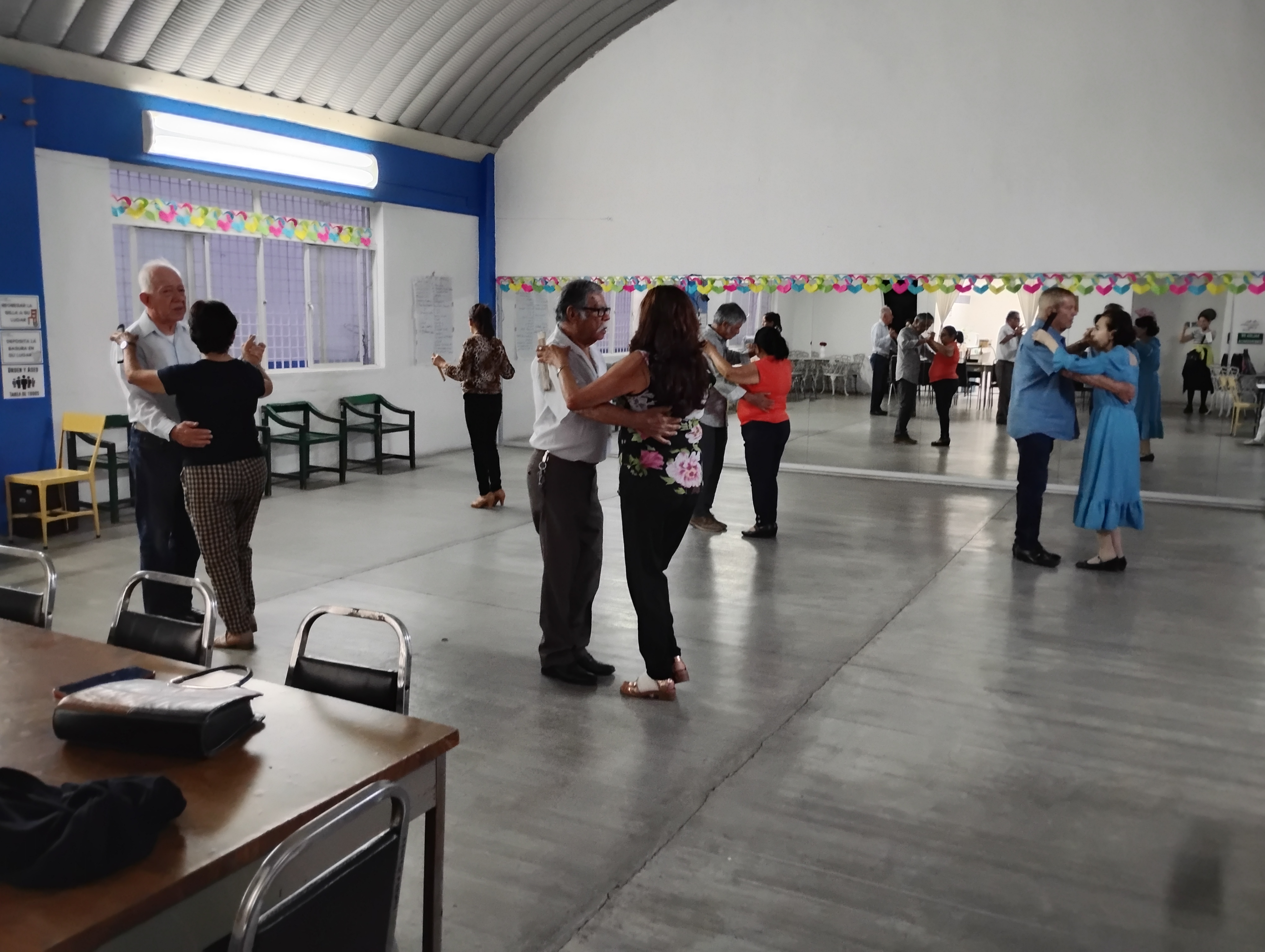
Club de la Tercera Edad is a public center for older adults run by CONACYT, the national counsel studying science and technology. When I arrived, there was a danzon class. Danzon is a Cuban music and slow dance tradition, immensely popular in Mexico and other parts of Latin America.

DIF and INAPAM Older Adult Activity Centers   Both DIF (Desarrollo Integral de la Familia) and INAPAM (Instituto Nacional de las Personas Adultas Mayores) are government run centers offering activities. They are separate entities but sometimes collaborate. DIF addresses entire family needs and is more about social protection of vulnerable populations. It offers adult daycare centers, psychosocial support, food programs, medical attention, recreational activities, and more. INAPAM is focused on older adult legal rights, transportation discounts, medical and cultural services.

On another trip I hope to meet Aguascalientes DIF director Aurora Jimenez Esquivel, known for her innovative initiatives including a popular travel program to visit nearby states known as “Gigantes Viajeros”. If you have access to Facebook, there are charming photos with older adults from Aguascalientes enjoying a trip at the FB page of Aurora Jimenez Esquivel. The link would not post when I loaded it here.

Señor Sebastian   As I made my way to the Panteón de los Ángeles y La Cruz, thirst led me to a sunlit corner store not far from the cemetery gates. There I met the venerable octogenarian you see in the photo whose warmth seemed to animate the whole neighborhood. With his son by his side, he presides over the store like a sage, sharing stories about local elders and aging in place. He graciously pointed me to the entrance of the cemetery. After wandering the peaceful grounds among small and large gravestones, I returned to thank him —feeling, in that moment, not just like a visitor, but welcomed to Aguascalientes. Memorable encounter.

Photos of the cemetery may be seen on an Aguascalientes Facebook page at: https://www.facebook.com/VivaAguascalientes/posts/pante%C3%B3n-de-los-%C3%A1ngeles-y-la-cruzaguascalientes-ofrece-una-gran-historia-en-relac/2168728129814822/

Assisted Living/Memory Care Residences

According to INEGI (the Mexican government statistics bureau) and Google, there are about 14 long-term care residences. (In Mexico long-term care is, with some exceptions, all in one – assisted living/memory care/nursing).

I focused on homes in the city center and visited seven to get a feeling for environment, providers, residents, and care.

Three assisted living/memory care homes had closed, one during COVID. Most places were basic, clean, modest, and dark, yet each with devoted caregivers. Residents in some homes seemed thrilled to have a visitor.

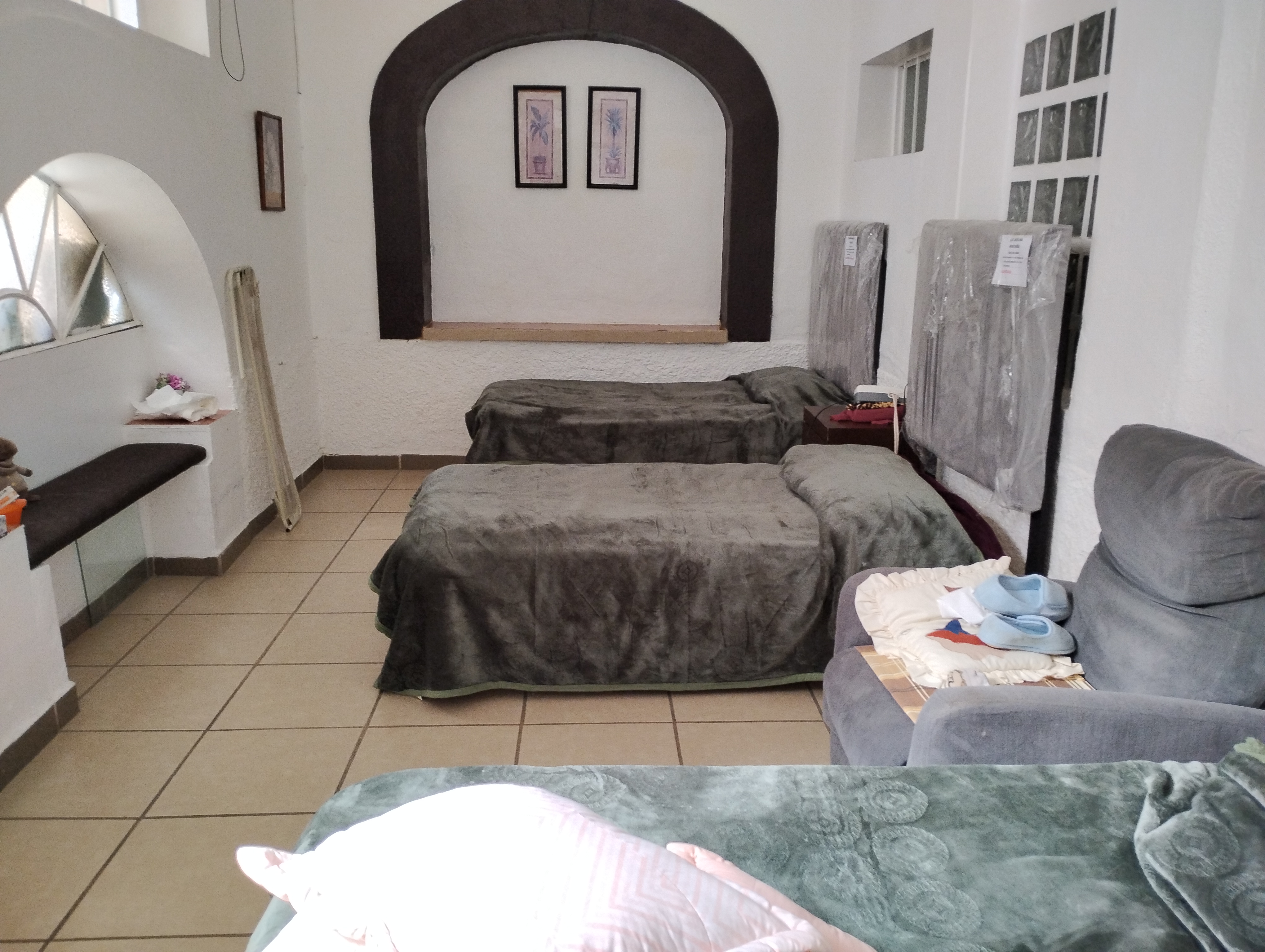
I was warmly welcomed at clean, efficient, light-filled Residencia de la Roble which houses 33 older adults including Mexican-Americans who prefer to age in their native Aguascalientes. Care costs are about $700/month USD (13,000 pesos/month) for shared rooms (there were two single rooms). Included in the fee: nutrition with customized diets, television and activities, laundry, medical care by the owner, a geriatrician, and most of all what appeared to be loving, energetic care by devoted nursing assistants. Note: Many Mexicans are accustomed to sharing space. The concept of privacy and your own room is often found with families who are well-off.

Here are photos showing a shared room with pristine, well-organized clothing and linen storage:

There is no website for Residencia de la Roble but you may find several photos of its high energy, activities, and sweet residents and caregivers on Facebook at Residencia para adulto mayor “El Roble”. https://www.facebook.com/profile.php?id=100064126566555

On my next visit I wish to tour Estancia Geriatrica Villas Juan Pablo as I had originally planned. It is a privileged residence in a park-like setting, also with lots of light, a few miles north of the city center. You will find photos at https://estanciageriatricavjp.com/  The environment reminds me of countryside care homes outside Quito, Ecuador – wood cabinetry, vistas of green meadows, tranquility. Under “instalaciones” there are photos of private rooms. The monthly prices at Villas Juan Pablo would be double, or more than double, the costs at Residencia de la Roble.

Note: prices for long-term care in the state of Aguascalientes are less than in the state of Jalisco (home to Guadalajara, Lake Chapala, and Puerto Vallarta). The Aguascalientes homes cater to local Mexican families.

Hospitals and Dental Care

Aguascalientes has an impressive medical infrastructure with hospitals both public and private.  Hospital MAC (there are two, one in the north the other in city center), Centro Hospitalario de Aguascalientes, Star Medica, Centro Medico la Salud, Hospital Cardiologica de Aguascalientes, Medica San Juan de Aguascalientes, Hospital Fundación Medica México Franco Brasileña plus a plethora of other options for specialized medical care as well as dentistry.

Emergency Care at Hospital MAC

The third night of my visit I awakened around 10-10:30 p.m. feeling tingling down my right side and leg. My first thought, oh no, not a TIA/stroke!! But I was able to speak. The sweet elderly man on night duty at the hotel suggested a taxi to the Red Cross. I wished for a hospital. I was super weak and dizzy yet decided to slowly walk to a nearby hotel. The night duty clerk there suggested Hospital MAC, a few blocks away.

There are about 30 MAC hospitals in the country. I had visited others and felt confident. I was especially encouraged because I could see the hospital tower from the front door of the hotel. I walked slowly but surely about four short blocks and made it to the emergency room. A nurse promptly greeted me, took my name, invited me to a room, took my vitals. I was then escorted to meet Dra Nancy originally from Mexico City and a graduate of UNAM. She was amazing – attentive, kind, professional. A thorough assessment of eyes, strength in arms and legs, heart, walking etc. Thankfully I was going to be okay. I was dehydrated (first time ever and quite a lesson) and had a bit of heat stroke from walking in the sun from early morning to sundown. The hospital experience was a gift, and I remain grateful to all who assisted and cared for me at the hotel as well.

Palliative Care and End-of-Life Care

Pain relief for life-limiting illness is offered by 14 anesthesiologists with palliative care credentials at hospitals and clinics. Two of the physicians drive from Guadalajara. According to a list of medical providers, there are 20 geriatricians. In-home pain relief for end-of-life is offered by at least two geriatricians.

All assisted living/nursing homes attend to end-of-life.

One residence, Hogar del Abuelo Maty, was founded with supportive end-of-life care in mind. It is in the countryside one hour to the northeast of Aguascalientes.

The home, opened in 1981, is named in remembrance of Matilde (Maty) Dubroy de Villanueva who was accompanied at end of life by her daughter Carolina Villanueva de Garcia. The profound experience inspired Señora Carolina to build the hogar where every elder could have a dignified death with compassionate, personalized care. 

The current administrator of the non-profit is the founder’s son, Carlos Garcia Villanueva. Care is provided by nurse nuns of St. Vincent de Paul. The nuns have a long and rich history of companioning the infirm and those at end-of-life. The website with photos and videos reveals more:  https://www.hogardelabuelomaty.org/

While I did not encounter any modern-day end-of-life doulas in Aguascalientes, Mexico, non-medical, psychosocial spiritual support has been a community tradition for centuries. Local women known as “parteras” assist not only with birth but have a significant role supporting families and individuals during the dying process.

Funeral Home Arriaga 

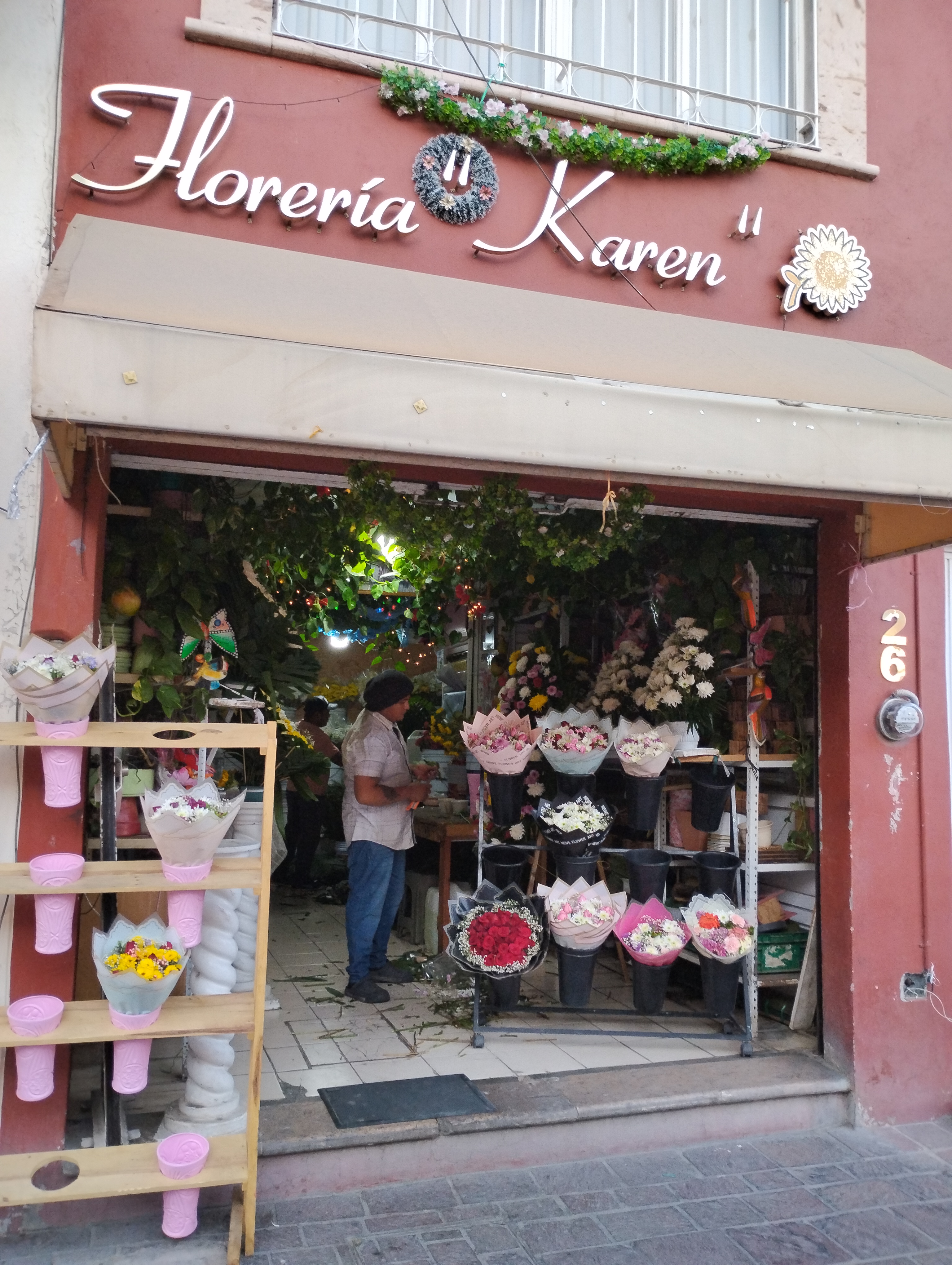
Toward the end of each day, I passed Funeraria Arriaga on the way to my hotel. Families waited inside where there are four viewing rooms and a place to sit and sip coffee or tea. Or, they waited in front of the building. There is a florist across the street.

Most Mexicans choose burial in a coffin. For those who choose cremation, the cost with this funeral home is between 9,000 and 20,000 pesos ($470 to $1000 USD) depending on whether there is a memorial service. According to Funeraria Arriaga there is no refrigeration in Aguascalientes but there is embalming. (Refrigeration is possible in Jalisco to create time for family members arriving from far away to view the deceased). The Boinita Group advertises green spaces for cremains (ashes) in Aguascalientes as well as Cancun, Hermosillo, Merida, and San Luis Potosi. https://boinita.com/en/green-niches-of-funerary-forests-in-mexico/

National Museum of Death

The museum, which opened in 2007, exhibits death-related artifacts from pre-Hispanic times to the present from the personal collection of Octavio Bajonero Gil. The 2,000 or so items include sacred religious paintings, sculptures, objects d’arte, and more. They are displayed in three connected buildings of a restored 17th century convent that once housed Franciscan monks. The property is now owned by the University of Aguascalientes.

My experience was not of the macabre. Some items show the unique Mexican sense of humor.

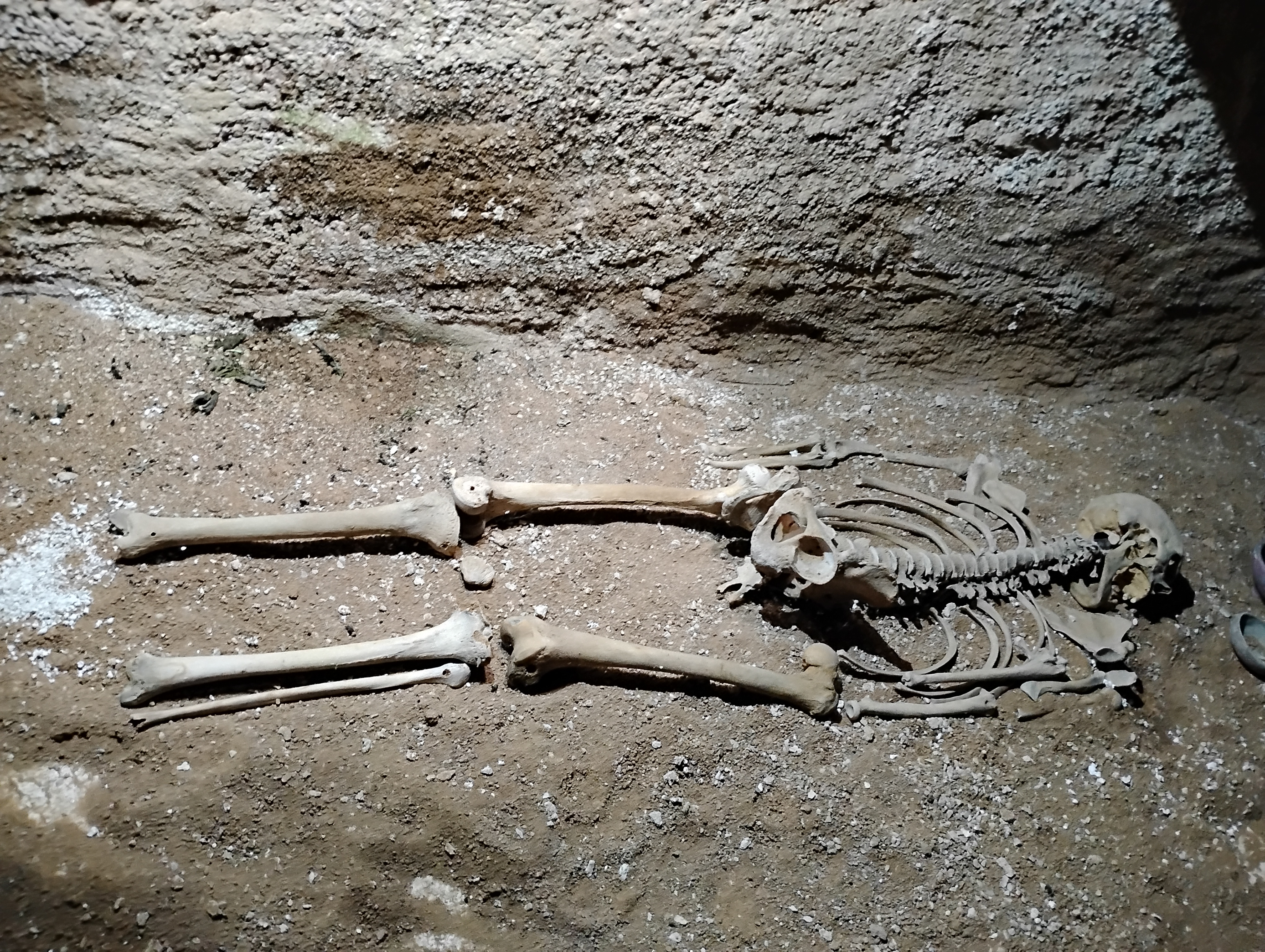
At the entrance of the museum is a gift shop where you pay an entrance fee of 20 pesos ($1 USD). It takes 45 minutes to an hour for a self-guided tour. If you are lucky you will have university student Antonio accompany you to the basement to see reconstructed gravesite remains. The photo below was taken in the basement:

Later, multi-lingual Jesus from Mexico City who delighted me with his Italian might lead you through the floors and buildings.

The Instagram video at this link shows more items displayed in the museum: https://www.instagram.com/reel/C-Ag-HsgAFv/

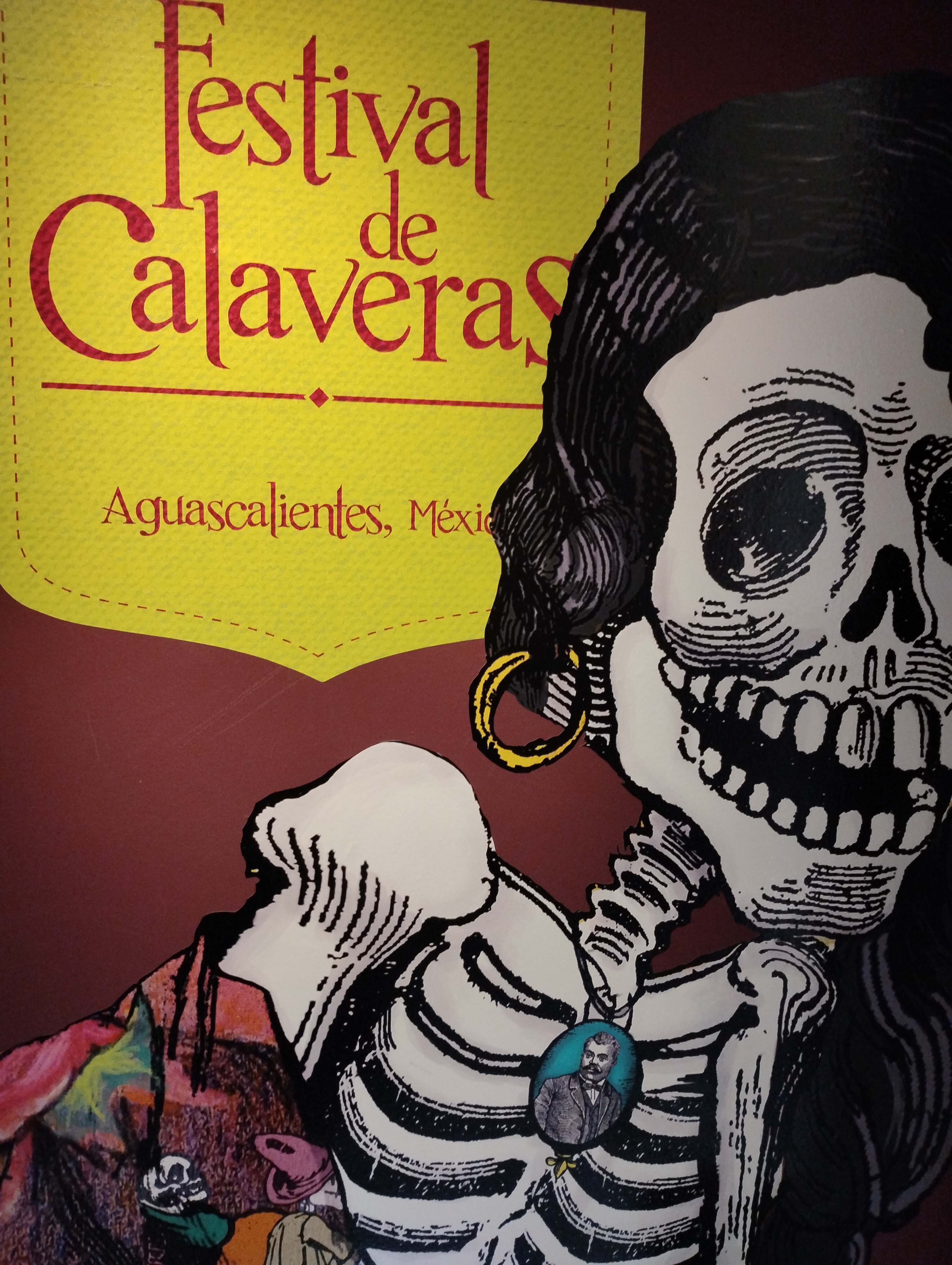
The museum produces 200 or so events per year including the October/November Day of the Dead Celebrations.  At the writing of this post the calendar of events for the 2025 Annual Festival de Calaveras (skeletons) has yet to be posted.

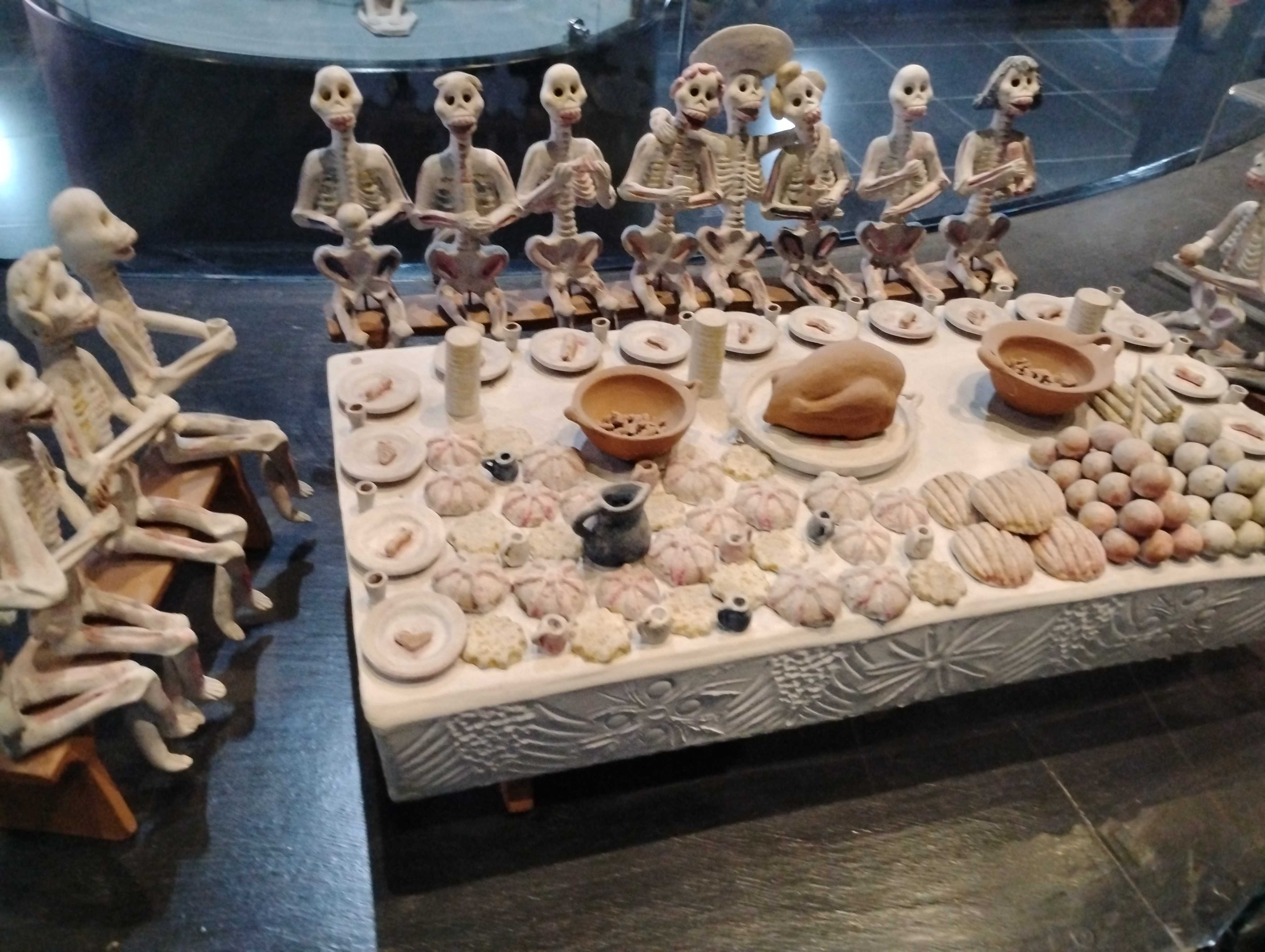
Museo Posada This museum is dedicated to the collected works of Aguascalientes native Jose Guadalupe Posada (2 February 1852 – 20 January 1913), a political satirist/caricaturist, engraver, and printmaker known throughout Mexico as the father of La Calavera Garbancera/La Catrina, a female skeleton dressed to the nines that is seen each year at Dia de los Muertos/Day of the Dead ceremonies. During the presidencies of Portfirio Diaz (1876-1911) Posada introduced skulls and bones as political and cultural critique. La Catrina indicates death comes to all, including politicians and the super wealthy. Here below is a Catrina from the Museum of Death:

Photos of the museum and its contents may be seen at this link: https://ags.gob.mx/turismo/conocemas/museoposada/index.html

©  All rights reserved. Wendy Jane Carrel 2025

Wendy Jane Carrel, MA, is a trusted older adult advocate and consultant who has many years of hands-on experience with healthcare systems, retirement options, senior living and wellness programs in Mexico, Ecuador, Italy, the U.S., and beyond. She provides culturally sensitive transition guidance and curated options for families and elders domestically and internationally. Wendy’s web site is https://www.WellnessShepherd.com

Resources

https://en.wikipedia.org/wiki/List_of_states_of_Mexico

https://en.wikipedia.org/wiki/Aguascalientes_(city)

https://en.wikipedia.org/wiki/Jos%C3%A9_Guadalupe_Posada

https://www.hospitalesmac.com/  MAC Sur, Aguasacalientes, República de Perú 102, Las Américas, 20230 Aguascalientes, Ags., Mexico    Open 24 hours

https://www.atlasobscura.com/places/national-museum-of-death

https://www.youtube.com/watch?v=01-n8TduhkM   Mariana Lange’s Mexico Relocation Guide

https://roadtrippers.com/magazine/10-macabre-museums/

Aging in Place Mexico, Assisted Living Mexico, Death in Mexico, Older Adults Calvillo Mexico

Mexican Pueblo Magico (Magical Town) Aging in Place/Aging in Community, Calvillo, Aguascalientes

It is a gift to travel.

In Mexico I have enjoyed exploring Pueblos Magicos (magical towns) from Alamos (Sonora in the north) to Izamal (Yucatan in the south), learning about Aging in Place/Aging in Community (which most Mexicans do), healthcare, and end of this life traditions.

Magical towns are designated by the Mexican government SECTUR (Mexican Tourism Board) as part of “Mexico desconocido” or unknown Mexico – towns or villages representing the cultural diversity of the country.

Below is a photo along the malecon adjacent to Rio Calvillo (the river) near the entrance to Calvillo a pueblo magico in the state of Aguascalientes.

I recently had the pleasure of visiting Calvillo, Mexico’s leading producer of guavas. There is far more to meet the eye than guavas, and, there was that feeling of magic.

What immediately struck me on arrival at the bus station was how clean the streets are (no trash, no stains), how flat the city is (mostly), how safe and flat the sidewalks are, how immediately friendly the people were, and how unpolluted the air seemed. It was a breezy, sunny weekday.

Just a few minutes away, down Calle Jesus Gomez Portugal to the left of the hallway exit, I stopped outside a space flooded with light and inviting aromas. A local restaurant, Gorditas Jenny. Smiling ladies beckoned me to enter for a look see. Fresh, unadulterated breakfast food in an immaculate setting served from 8:30 a.m. to 1 p.m. Yes, I tried it and wish to return! Thank you, ladies!!

The Casa del Abuelo (grandparent’s home), a DIF (government) day center for older adults which opened in January 2024, was the next stop. In the link below you will see a photo of the entrance: https://www.elclarinete.com.mx/inauguran-la-casa-del-abuelo-en-calvillo/

Again, a warm and welcoming reception on arrival. The center offers painting (part of a program called “pintemos la magia de Calvillo” – let’s paint the magic of Calvillo), tai chi, chair exercises, handicrafts, carpentry, meals, trips, and resources for aging. In the following short you will hear precious elder Salomé Salas, a 94-year-old, joyfully share in Spanish why he loves the center, and you’ll get a glimpse of some of the activities. https://www.facebook.com/reel/3714970688791551

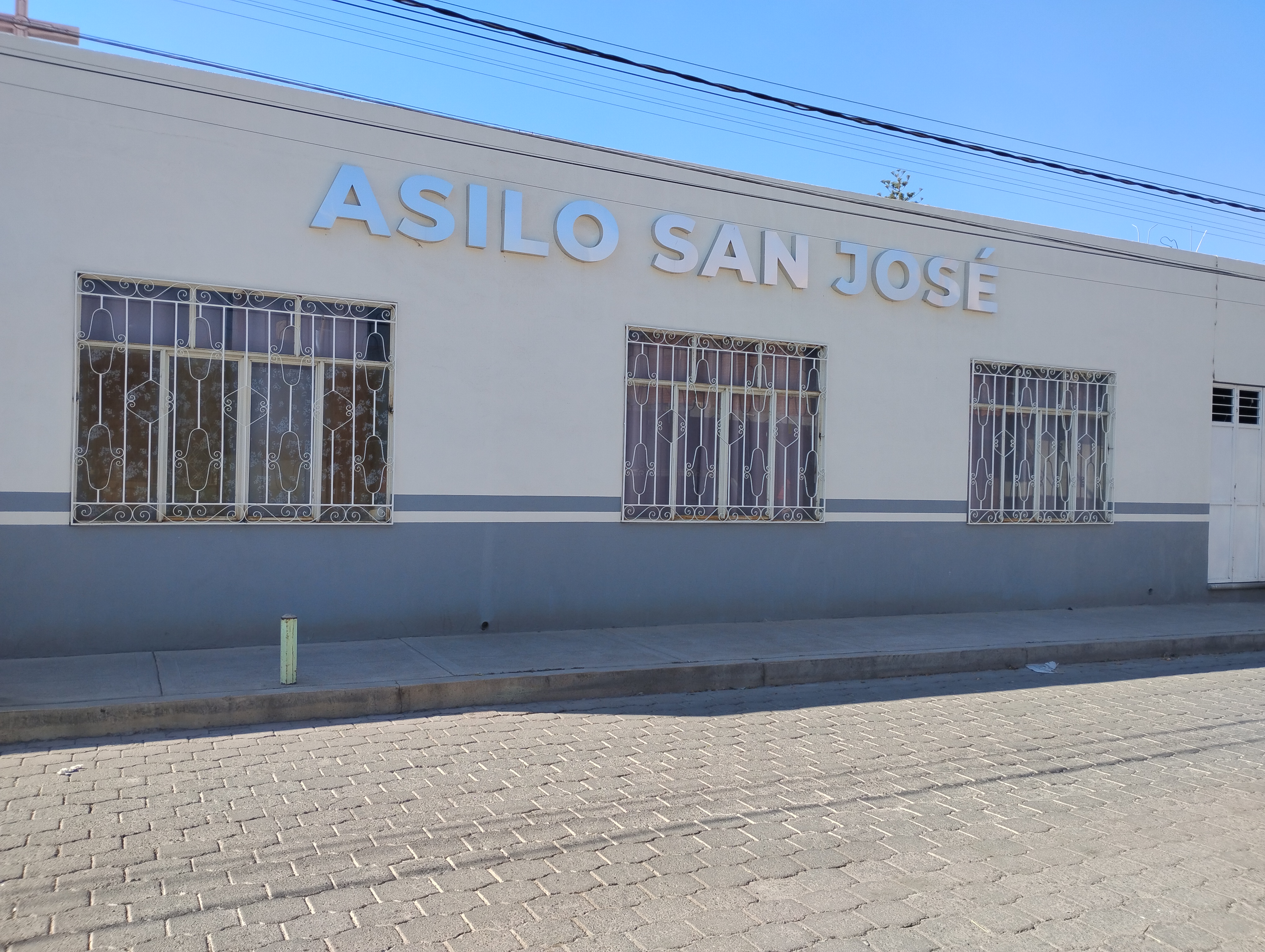
Asilo San José (originally Asilo de Los Ancianos Señor San José) is the only assisted living/nursing home in Calvillo. It was founded by the Catholic church and a group of locals and continues to be supported by the church, the locals, and a group of Mexican/Mexican-Americans from Santa Paula, Ventura County, CA, “citrus capital of the world.” As with many Mexicans who emigrate to the U.S., folks from Calvillo and surroundings send funds or return home to support the local community. Those who were born here often prefer to return to die or be buried.

Front of the Asilo San Jose Assisted Living/Nursing Home in Calvillo below.

Over 50 residents, men and women, reside on the spacious campus with three sections of housing. Most rooms are shared, two to a room. When I arrived, elders in wheelchairs were accompanied from mass at the chapel back to their rooms or recreation hall. I met with lovely assistant administrator Maria who graciously showed me the living quarters, the perfectly organized laundry and wardrobe area, the dining area, the meds room, and the offices. We agreed I would not take any photos. I was grateful to feel a sense of attention and care from her and the support staff as they looked after their charges. Without spending more time, or talking to community members, it is difficult to assess more. What was clear, however, is that the residence was welcoming and the residents clean, smiling, and mostly disabled, one severely disabled/bed-confined with an attendant. Each required round-the-clock care perhaps not possible in their homes. Below is a link to a video filmed 10 years ago which offers an idea of the environment, now re-painted and more lively.

https://www.youtube.com/watch?v=x0dbLLBaQ4g

Medical care

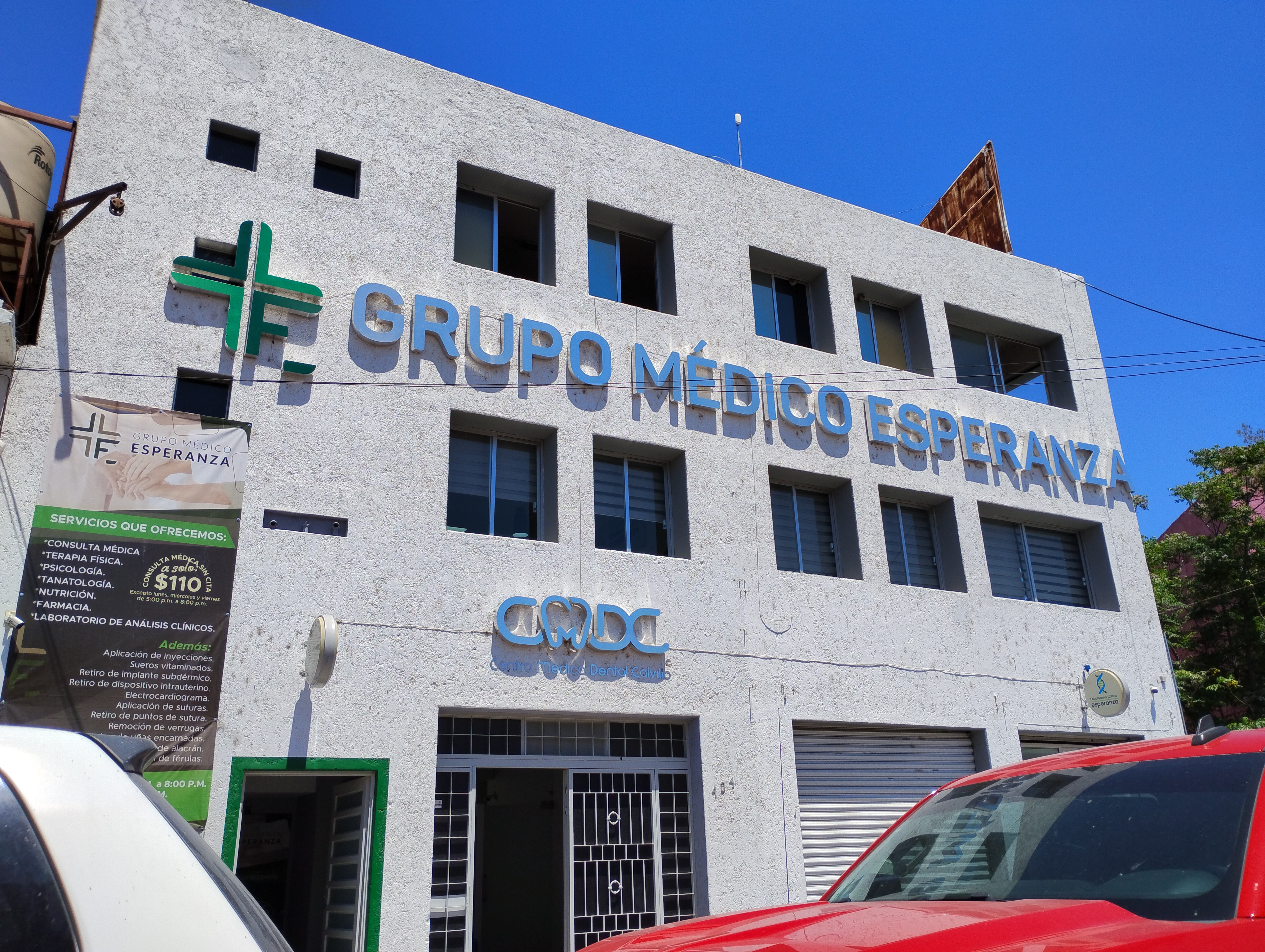
There are three small hospitals in town: Hospital General de Calvillo, IMSS Unidad de Medicina Familiar, and the Clinca del Valle. I was unable to manage site visits, but I understood from locals that for more serious medical challenges some folks go to Aguascalientes an hour away by car or bus. I noticed medical and dental offices in the city center.

Parrochia del Señor del Salitre 

The beautiful baroque parish church has three magnificent domes adorned with frescoes. It is dedicated to the patron saint of the city, Lord of the Saltpeter. According to city legend a group of older adults saw a miraculous appearance of the Lord on the parish spot before the church was built around 200 years ago. The colors inside are gold, light pink, and light blue.

The people of Calvillo appear to be deeply religious.

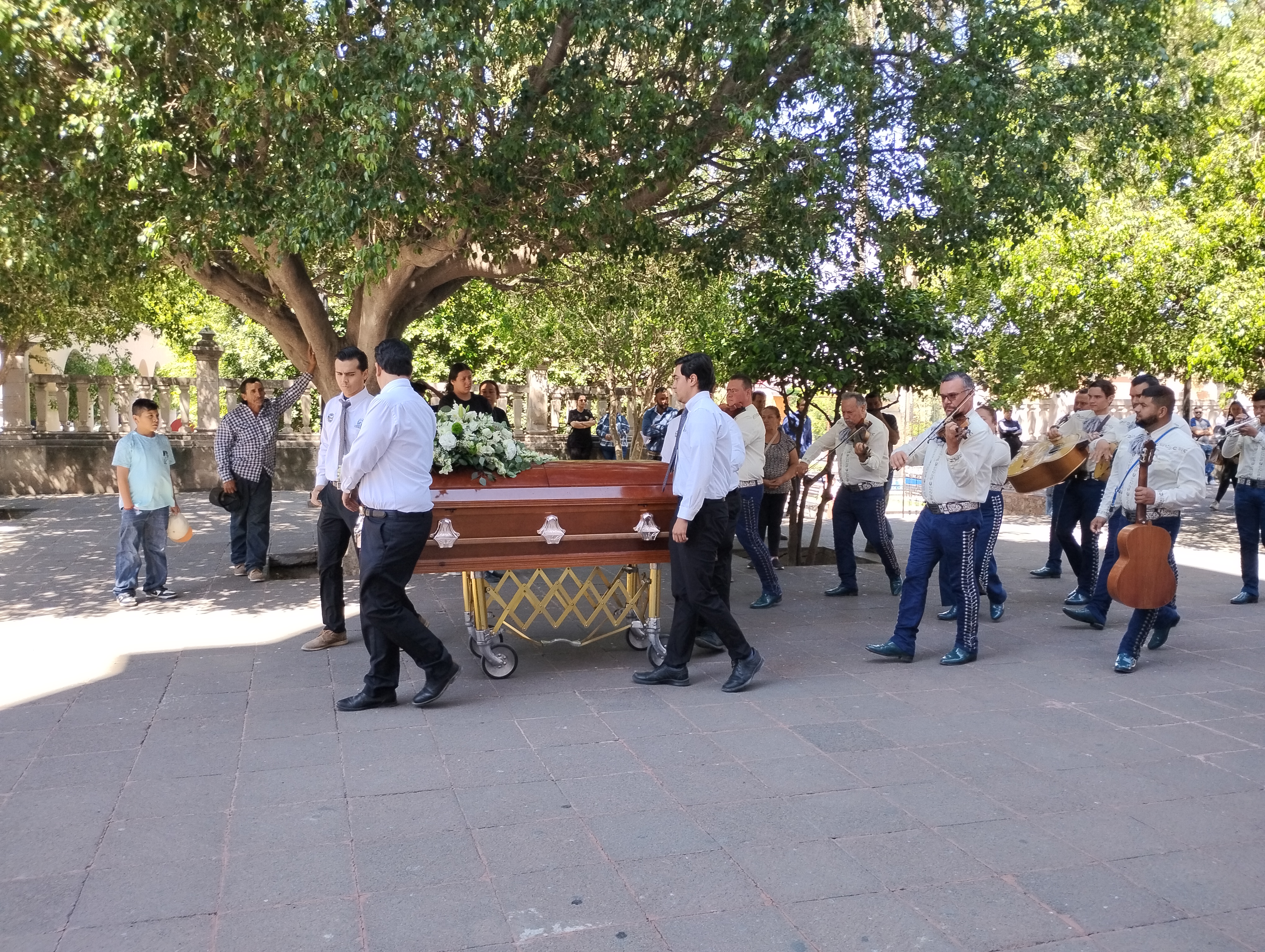
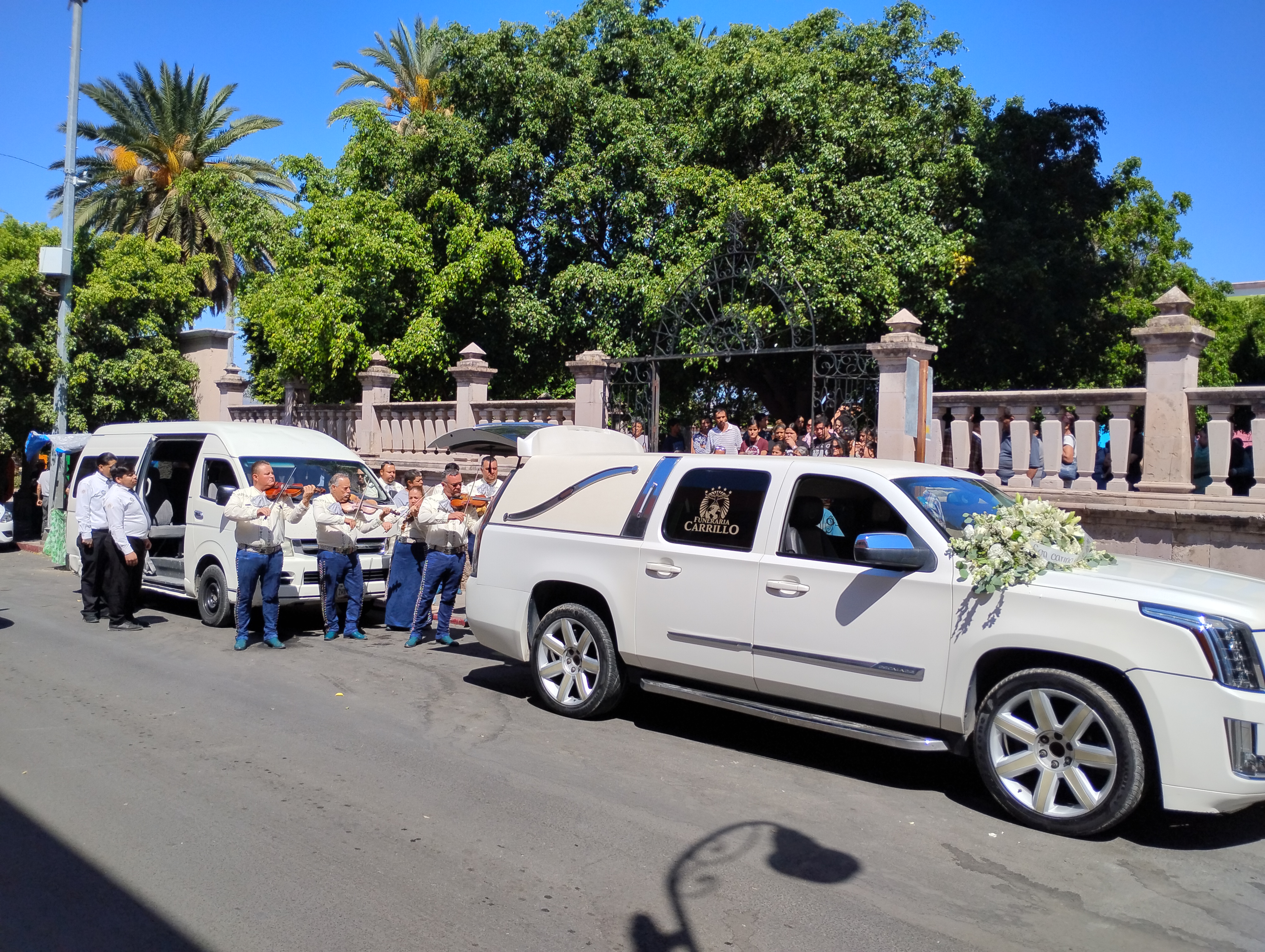
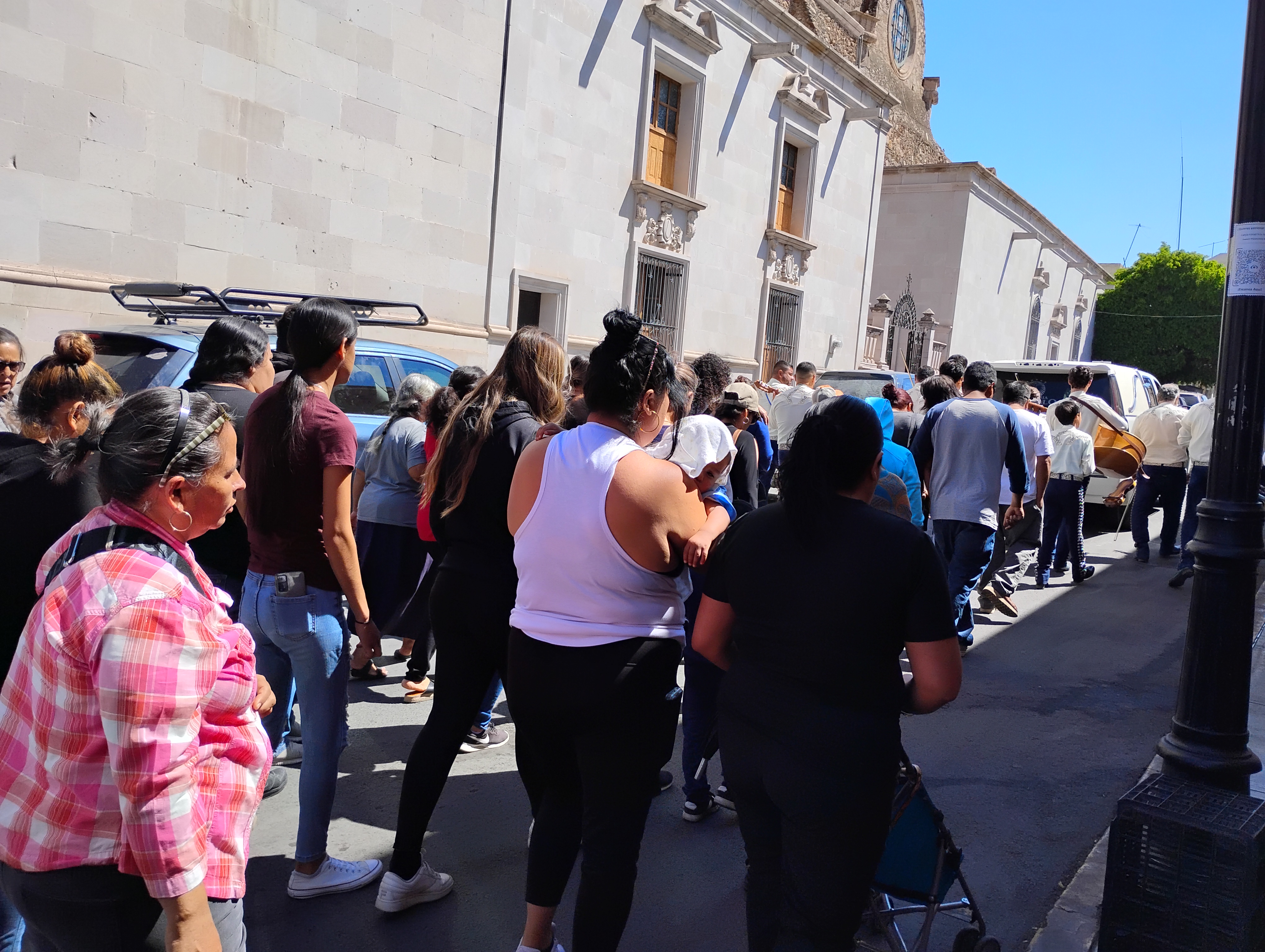
It was a remarkable synchronicity that I arrived at the church in time to attend mass for a beloved older woman. The church was full. I stood in the back. Mariachis waited at the exit. After the mass they accompanied the woman’s casket to a waiting car.

The woman’s family sat in the van behind the white hearse. Music played for blocks around the church and down Avenida Revolucion to the Cemeterio Señor del Salitre about a mile away.

The gentle words of the priest at mass, the reverence and grief of the attendees, the mariachis, and the atmosphere were deeply moving. I was simply a bystander. My eyes and heart welled up with tears off and on. A blessed experience. I am thankful to the fellows from Funeraria Carrillo who shared some of the details.

National Museum of Magical Towns  It was a nice surprise to walk down Avenida Benito Juarez in the afternoon and discover this beautiful museum which I did not know existed until I walked by!!

There are 177 magical towns in Mexico’s 32 states. The museum showcases folklore, cuisine, handicrafts, and traditions from eight regions. You may learn more about the museum at this link: https://magicaltowns.mx/atractivos/museo-nacional-de-pueblos-magicos/  

The photo below features a piece in the museum from Morelos, Mexico, representing the creation of man, community, and the universe.

Conclusion:

Magical town Cavillo, with a population of around 60,000, is clean, inviting, and well-organized and worth a weekday visit. It is apparently crowded on weekends and on festival days.

Its streets are flat, its sidewalks comfortable for walking. In a few places there are hills. It sits alongside the Rio Calvillo.

Aging in Place/Aging in Community seems a lot easier in Calvillo than in larger Mexican cities, especially if you are not of high income. There is local social support and love energy.

Resources:

https://www.lugaresturisticosenmexico.com/en/calvillo-aguascalientes-mx/

https://www.instagram.com/p/C2nT344Re1v/  inauguration day at Casa del Abuelo, Calvillo, Aguascalientes

Aging in Community, West Hollywood, CACA, Aging in Place, West Hollywood, CA, Older Adult Accessibility, Older Adult Advisory Board, West Hollywood, CA, Solo Ager West Hollywood, CA

West Hollywood Celebrates Aging in Place During Older Adults Month May 2025

City streets were abloom with jacaranda and magnolia trees, and sidewalk gardens featured roses, brugmansia, and honeysuckle as the City of West Hollywood, California celebrated Older Adults Month in May 2025.  

Aging in Place/Aging in Community resources and services were highlighted, and the city honored a senior who has made a difference in the community.

Since 2016, the Aging in Place/Aging in Community Strategic Plan created to accommodate the anticipated silver tsunami (the worldwide phenomenon of older adults living longer) has been a stand-out initiative. The goal: offer quality-of-life and a sense of control for aging where you live with an extensive array of easy access support services. According to the 2020 census the population of West Hollywood is around 36,000 with older adults 65+ representing 20% of residents (7,200).

A recent West Hollywood Aging in Place success story:

A 92-year-old solo ager was hospitalized after breaking a hip and femur bone. From the time she entered an in-patient rehab she knew she wanted to be at home. Any other place? She felt her life might unravel. The challenge? How to access the only bathroom located upstairs in her one-bedroom apartment. With the good offices of a Jewish Family Services social worker, the woman’s health care advocate who lives almost an hour away, and the non-profit DCRC (Disability Community Resource Center) which serves the disabled, a stairlift was installed so she could continue to enjoy her home of over 50 years. Her health and her spirits improved greatly over a period of months. So greatly that she was able to give a poetry reading from her recently published book at a southern California library the last week of May. She continues to use a walker. The stairlift allows her comfort for healing and self-sufficiency.

Note: In 2022, the City of West Hollywood received the SCAN Foundation Innovation Award for “embracing aging” in one’s home throughout a person’s lifespan.

On May 14 at 2:00 p.m. at the televised Older Adult Advisory Board (OAAB) meeting, Richard (Ritch) Colbert a chaplain at Cedars-Sinai Medical Center and 39+ year counselor for the recovery and LGBTQ communities received the Senior of the Year Service Award with a proclamation presented by Mayor Chelsea Byers and OAAB Vice-Chairman RJ Holguin. Story plus photos at this link: https://wehotimes.com/west-hollywood-honors-richard-colbert-at-20th-annual-older-adults-service-awards/

Older Adult Advisory Board Chairman John Allendorfer deftly guided the televised meeting. During Public Comments Disability Advisory Board member Rick Watts and Human Services Commission member Karen Eyres spoke movingly about current concerns, mainly proposed Medicaid cuts which would harm children, the disabled, and older adults. Medicaid, known as Medi-Cal in California, currently provides essential health care coverage including support for vulnerable older adults for long-term care in nursing homes.

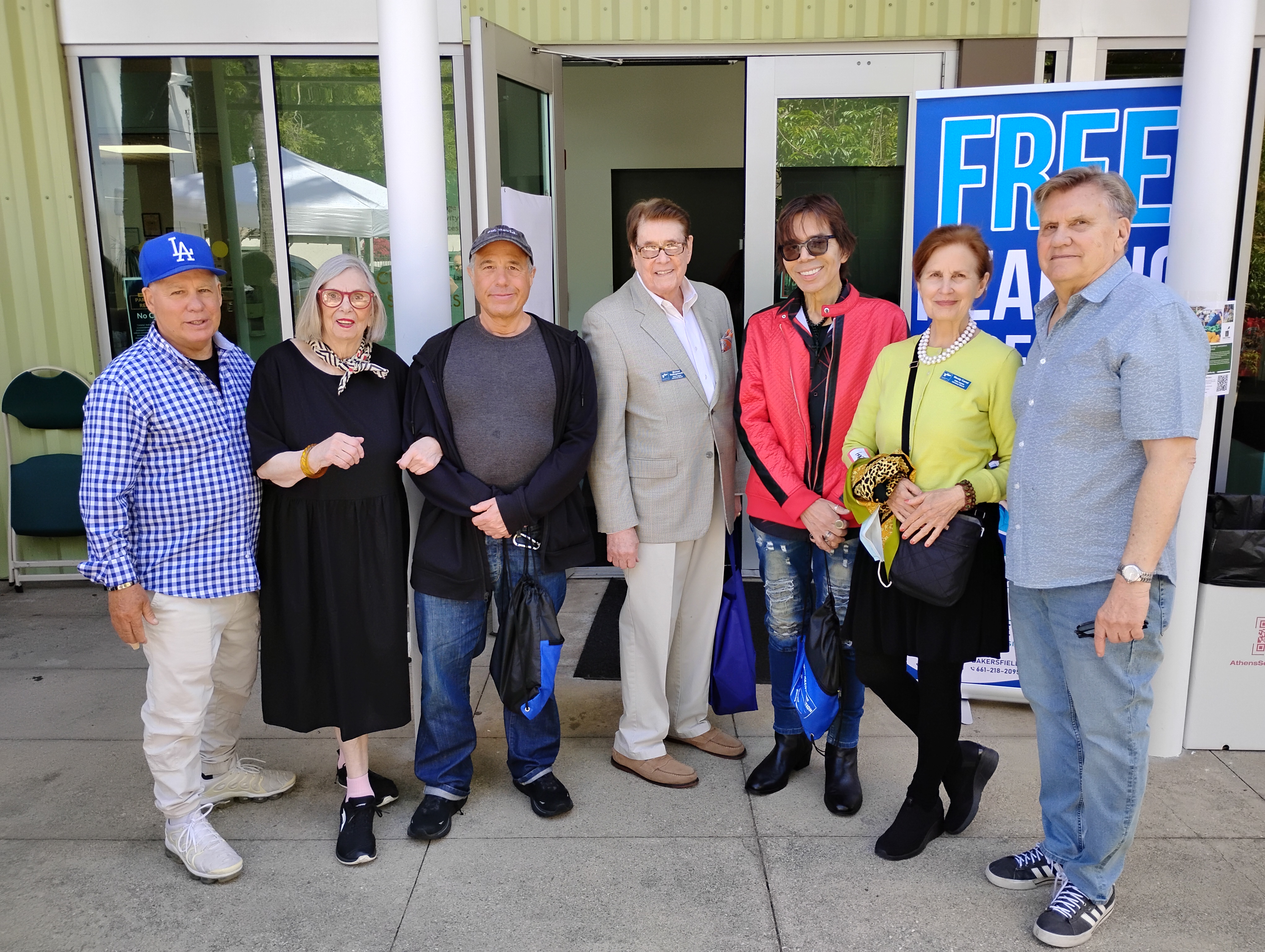
West Hollywood Older Adult Advisory Board members at the 20th Annual Older Adult Health Fair on May 8, 2025 in the photo below. Missing are members Nadia Sutton and A. Lee Walkup.

On May 8 several hundred seniors convened at Plummer Park for the 20th Annual Older Adult Health Fair co-sponsored by Cedars-Sinai Medical Center and Jewish Family Services. Attendees learned about and/or applied for assistance with an array of non-profits:

Access LA transportation services for the disabled

Bez Tezek Free Legal Services

City of West Hollywood Rent Stabilization Department “Know Your Rights” Workshop

One Generation’s program registration for utility assistance and energy conservation

Jewish Family Services social worker support

Jewish Family Services nutrition education and meals at centers around the community

Jewish Family Services exercise and crafts classes, a social engagement monthly meeting, classes in digital education 

Maple Counseling mental health support

Project Angel Food’s medically tailored home-delivered meals

The California Hearing Center, a family business, offered free hearing assessment tests

Others   

Most of these programs/services are free or donation based.

Not present at the fair in 2025 but present last year was Metro.net the LA County bus and rail transportation system which continues to offer West Hollywood older adults $20/month complimentary travel on Metro. Seniors TAP cards are reloaded with the city.

According to Rent Café, approximately 80% of West Hollywood residents are renters. West Hollywood’s Rent Stabilization Department gave a presentation at the fair. Grassroots community organization Coalition for Economic Survival (CES), focused on supporting tenant’s rights since 1973, was also present.

Cedars-Sinai Medical Center offered:

blood pressure readings, blood glucose readings

cholesterol readings, heart rate reports

consultations with an MD

participation for those interested in a Cedars-Sinai free genetic testing research project

The Care Team, active in West Hollywood since the fall of 2023, and at the fair for the first time, offers mobile behavioral health support in partnership with www.sycamores.org. A two-person team cum phone coordinator 24/7, holidays included, mans each shift. They work in tandem with the County Fire Department’s Station 7 & 8 in West Hollywood, and the West Hollywood Sheriff’s station to respond to crisis situations, especially assisting the unhoused and other vulnerable populations “in an atmosphere that empowers”. The team also conducts follow-up care and wellness checks for all who call. The Care Team number is (323)540-6392. Also see www.weho.org/careteam.

Preparing for the West Hollywood 20th Annual Senior Health Fair on May 8 in the photo below are Older Adult Advisory Board Member Pat Dixon (on the left), honored with the 2025 LA County Older Adult Service Award, and Francisco Gomez, Acting Strategic Initiatives Supervisor, City of West Hollywood currently dedicated to the Holloway Interim Housing Program.

A community Aging in Place plan is a privilege. Nationwide surveys reveal 90% of the older adult population prefers to age in place.

West Hollywood is a small, young city of about two square miles sitting on the unceded land of the Gabrieleño Tongva and Gabrieleño Kizh peoples. It is surrounded by the City of Los Angeles. Los Angeles, founded in 1781, has an estimated population of around 3.8 million. Two older adults from Culver City (20-30 minutes away) who attended the health fair last year and this year shared how they wish they could move to West Hollywood. Other older adults who live in Los Angeles county and neighboring Los Angeles have shared similar thoughts with this writer after witnessing and comparing services. (Yes, a smaller population creates a more tenable situation).

Photos by City of West Hollywood photographer Joshua Barash of Older Adult Month May events may be found online at https://www.flickr.com/photos/weho/albums/

Conclusion:

In its 40 years as a city, West Hollywood has created a strong bank of social service resources for all citizens, not only seniors. Its Aging in Place/Aging in Community plan won the SCAN Foundation’s Innovation award.   

Other age-friendly cities actively developing notable services for health, housing, participation, security, transportation, and more are Rochester, NY; Grand Rapids, MI; Madison, WI; Provo, Utah and others. On the This Old House survey (see resource section below), West Hollywood is listed as number seven out of 10, mostly because the cost of living in California is higher compared to the rest of the cities on the list.

Honoring contributions of older adults each year and addressing their needs in aging officially started by federal government decree in 1963. At that time 17 million older adults were 65 or older, one third lived in poverty, and few programs existed to meet their needs. Today there are approximately 60 million older adults in the U.S., nine million in the State of California.

Disclaimer: The author has lived in West Hollywood, CA since graduate school and has a bias for a community she appreciates living in.

© Wendy Jane Carrel, 2025

Wendy Jane Carrel, MA, is an older adult health care advocate, advisor, and care coordinator from California. She has conducted due diligence for senior living and retirement on five continents and is passionate about supporting families and their elders. She provides informed, attentive, compassionate guidance and curated options for aging in Ecuador, Mexico, and other destinations both domestic and abroad. She is a speaker and published author on subjects related to senior well-being. Wendy’s web site is https://www.WellnessShepherd.com 

Resources:

https://acl.gov/oam/history# Administration for Community Living website (formerly Administration on Aging website)

https://www.democratandchronicle.com/story/news/2024/12/05/rochester-ny-named-best-in-the-u-s-for-aging-in-place-heres-why/76733432007/ This Old House’s 10 best cities for aging

https://scag.ca.gov/sites/default/files/old/file-attachments/west-hollywood-he-0421.pdf West Hollywood renter statistics from the Southern California Area of Government

https://www.weho.org/Home/Components/News/News/10603/23 Scan Foundation Award news

https://en.wikipedia.org/wiki/West_Hollywood,_California

Advance Health Care Planning Mexico, Death in Mexico, Dying in Mexico, Health & Wellness Mexico, La ley de voluntad anticipada Mexico

Why Creating an Advance Health Care Directive in Mexico (and Latin America) Makes Sense If You Are an Expat

If you live in Mexico or Latin America, have you created a plan for what to do in case of an accident, natural disaster, or healthcare emergency? 

Who is going to show up for you?! What if you are no longer able to speak and make decisions for yourself?

If you wish to save your family and other loved ones considerable grief and time, it is important to understand what is involved when a foreigner becomes ill or dies in Mexico or other Latin American nation.

Last month I had the pleasure of joining patient advocate and educator colleague Deborah Bickel of Be Well San Miguel to share with expats why it is wise to create a Mexican declaracion jurada (living will) and/or voluntad anticipada (advance healthcare directive). The voluntad anticipada is incorporated into the declaracion jurada in many sates. My role in the meeting was to give an overview of palliative care and hospice and how to find end-of-life support in Mexico.

We have each invested 14 years or more sharing with expats (Deborah in Mexico, Guatemala, and Nicaragua – me in Mexico and Ecuador) why planning is important no matter your age but especially if you are 55+.

Short list of reasons:

Mexican law is civil law

British, Canadian, and U.S. law is common law.

There are major differences.

If you arrive with an Advance Healthcare Directive or Five Wishes or other document legal in your native country, it will not be legal in Latin America unless you get lucky. In Mexico, you must create a declaracion jurada and/or voluntad anticipada if you want your wishes to be honored. Some attorneys and notaries will incorporate your home country wishes for you. These documents must be created BEFORE any accident, illness, or demise. As of this date only 14 of Mexico’s 32 states offer a voluntad anticipada. The purpose of the voluntad, sometimes referred to as a directriz, is to avoid legal, medical, and bioethical problems that could complicate the situation for you the patient or your family.

Mexico is a country with predominantly Catholic traditions. These traditions influence choices. If you are Catholic, the system may seem familiar, such as burial over cremation. If you had chosen to live in Buddhist or Hindu Asia, cremation would be a relatively easy matter involving fewer steps as cremation is common practice. Or, you could have opted for a Tibetan sky burial. If you wish to be cremated, you will need a notarized document stating this wish.

Latin Americans have large family systems. If something happens to you as a Latin American, a family member will show up and know what to do.  Most expats live in Latin America alone or as a couple, sometimes with children.

The Mexican culture, language, and way of thinking are unique. Most of all, procedures may be unfamiliar and complex. Attitudes and response to accidents, illness, and death are different.

Non-Spanish speaking expats often need bilingual advocates to negotiate the system. At least three people are recommended to advocate for your wishes, and/or serve as your healthcare proxies. If one is not available, perhaps another will be.

April 16 is National Healthcare Decisions Day in the U.S. If you do not yet have a plan, every day is a good day to work on one no matter where you are.

Aileen Gerhardt, a fellow patient advocate and educator in Boston writes “decide, document, designate, and discuss!!”  Good advice.

Deborah’s extensive advance healthcare directive service for Guanajuato state Mexico may be found at https://bewellsanmiguel.com/medical-directives/ :

Wendy Jane Carrel, MA, is a Spanish-speaking senior care advocate from California. She has travelled Mexico for several years researching health systems, senior care, and end-of-life care to connect Americans, Canadians, and Europeans with healing options for loved ones. She is a compassionate companion and palliative care liaison, legacy writer, co-founder of Café Mortality Ajijic/now Death Café Ajijic and founding member/speaker of the Beautiful Dying Expo (USA). She is a trauma-informed, gentle End-of-Life Doula (National End-of-Life Doula Alliance proficient), and a speaker and published author on subjects related to senior well-being. Wendy’s web site is https://www.WellnessShepherd.com

© All rights reserved.  Wendy Jane Carrel

Death and Dying, Grief Care, Grief Choir, Holiday Grief, Seasonal Grief, Somatic Grieving

Grief Choir: A Surprisingly Poignant Experience During the Holidays

The holiday season for many in the northern hemisphere is sometimes fraught with sadness, sorrow, and a sense of loss. Thankfully, there is an invitation for comfort and a unique panacea of sorts… a Grief Choir.

What is a Grief Choir and how did I end up attending one?

Elizabeth Gill Lui, the thoughtful leader of Death Café at the Los Angeles Philosophical Research Society, has a mailing list. I am thankfully on it. Her interests and friendships are deep and wide from experiences as a fine arts photographer, author, educator, end-of-life doula, and more.

I read about the gathering and felt compelled to attend.

Here is what happened:

I arrived late, by minutes.

About 30 folks were gathered quietly on chairs in a circle.

The Resonance Collective hosts, Artistic Director Fahad Siadat and clinical psychotherapist Cynthia Siadat smiled in my direction and welcomed me warmly. Someone added a chair so I could join the circle. Lovely.

The leaders shared…they created the concept of Grief Choir out of “a desire to hold space outside a particular religious context during times of loss.” The gathering was intended as a ritual “to sit with the darkness of grief and the growing light of the community with whom it is shared.” A special event, free, to sing and heal. No experience required.

Cynthia passed around a basket with pens and white cards. She asked attendees to write three words for why they came. The cards were collected in the basket and passed around again. This time each of us picked a card from the basket. Then we read aloud from the card we picked. Many reasons were remembrances – names of persons (or pets) who had passed. Do not know for certain as do not know who wrote the names or why. Touching to listen to, especially since none of us knew each other, and a way to feel connected to the community of 30.

Fahad then introduced the East Indian wooden shruti box, akin to a harmonium, sitting on his lap.

If interested, you may read about the shruti box here:

The box has bellows. Fahad slowly opened and closed the box like an accordion. There was no melody, but a drone sound with each movement. And then Fahad would hum and guide a sound meditation. The group was invited to respond and hum with him.  A call to grief if you will. The sounds defied description.

This was quite a surprise for me as I thought I had attended to listen to a choir. As it was then apparent, the choir consisted of all who attended, me included.

The humming at times took on the sound of gentle, tender, almost-wailing. Difficult to describe, intangible, something one must experience. Perhaps a bit of the ululations (zagrouta in Arabic), bouncing from lament to joy but not exactly that. Most of all, a feeling of support from others in the circle. Eyes were closed or open. Fahad and Cynthia had created a safe space. Mellow feelings at the end of the hour.

Fahad (imagine a modern-day Sufi or Rumi) has been described by the LA Times as a “fanciful and downright utopian artist and thinker”. His bio states he “explores sound as spiritual practice, creating interdisciplinary pieces as a vehicle for unveiling the mystery of our interconnected world.” An apt description.

I am pleased to have attended. Unique and memorable. For those who are in Los Angeles and interested, the next Grief Choir is scheduled for the Summer Solstice somewhere around June 20, 2025. The announcement will be made on the Resonance Collective website.

For information about the Resonance Collective and Fahad Siadat see:

For information about Cynthia Siadat see:

For more about Elizabeth Gill Lui see:

© Wendy Jane Carrel 2024

Wendy Jane Carrel, MA, is a Spanish-speaking senior care advocate from California. She has travelled Mexico (and Latin America) for several years researching health systems, senior care, and end-of-life care to connect Americans, Canadians, and Europeans with healing options for loved ones. She is a compassionate companion and palliative care liaison, legacy writer, co-founder of Café Mortality Ajijic/now Death Café Ajijic and founding member/speaker of the Beautiful Dying Expo (USA). She is a trauma-informed, gentle End-of-Life Doula (National End-of-Life Doula Alliance proficient), a speaker and published author on subjects related to senior well-being, and serves on the City of West Hollywood’s Older Adult Advisory Board. Wendy’s web site is https://www.WellnessShepherd.com

Death and Dying Education, End Well Conference, End-of-Life Care, Multi-Cultural Grief, Time to Pause (grief care)

Time to Pause Multi-Cultural Grief Gathering Follows End Well 2024 in Los Angeles

The day after the annual End Well conference in Los Angeles, End Well presenter Alica Forneret, Executive Director of Time to Pause, hosted the non-profit’s first-ever Resource Fair focused on grief in multi-cultural communities. An ideal segue.

The fair was held at Our House, a non-profit grief support center in West Los Angeles.  As the program noted, it was produced “by People of Color for People of Color.”

Alica personally welcomed all attendees at the entrance. A fine, warm beginning for what became a meaningful, memorable afternoon among the many who, according to Canadian sacred deathcare practitioner and teacher Sarah Kerr, PhD, “are called to transform how our culture(s) meet death and loss.”

First stop, one-hour with poet/writer Nicholas Reiner who offered reading and writing tools to navigate whatever stage of grief you may find yourself in. Nick lost his Los Angeles County Fireman and First Responder father in the line of duty. Nick was 9 years old at the time. Moving to hear his story, moving to hear Nick read his eloquent poem about this father in both English and Spanish, moving to hear letters of loss from others we read aloud. We were sent home with 10 pages of prompts, ideas, and other writings to ponder. Wonderful gift.

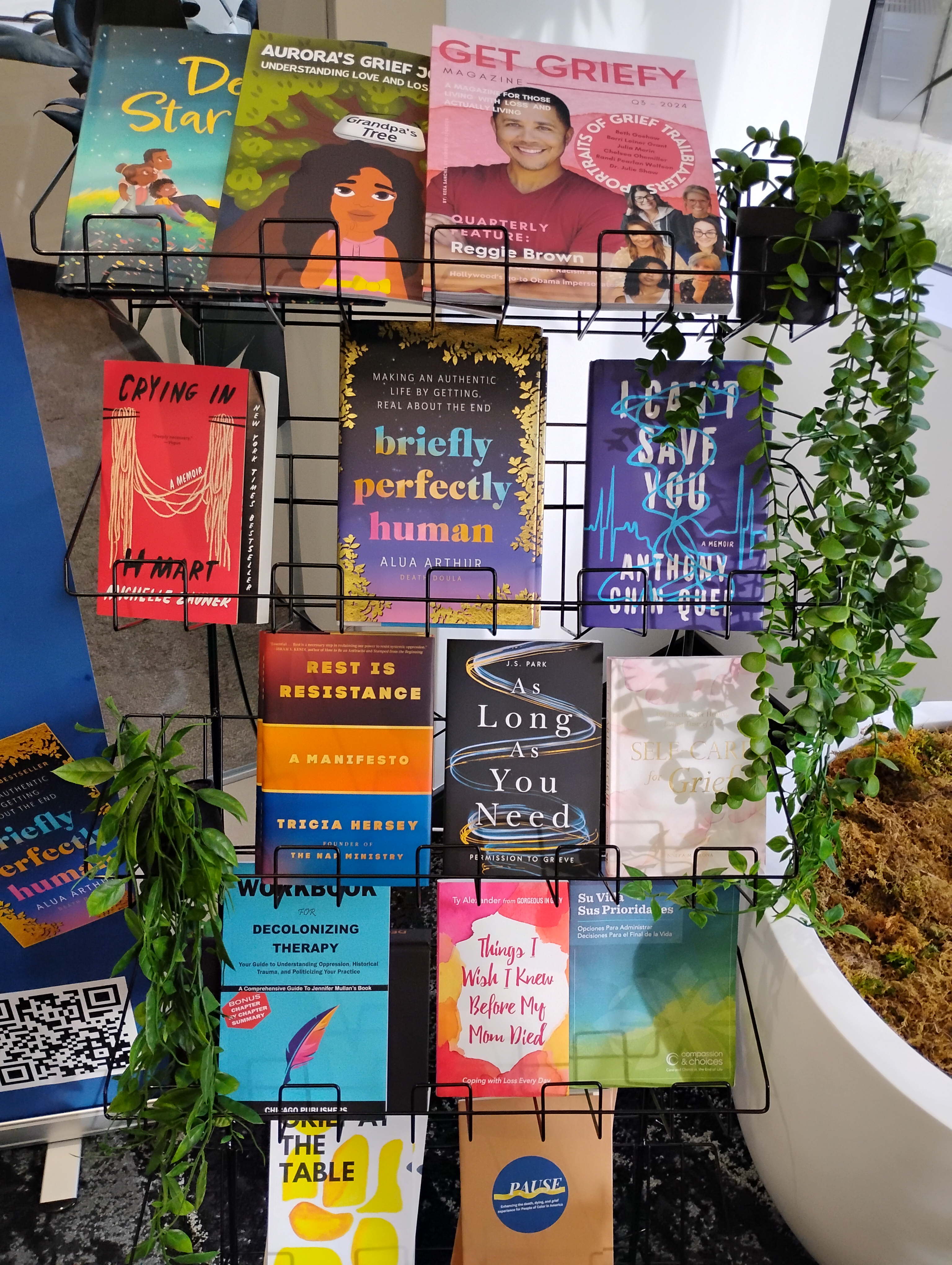
Next stop, the Book Nook with some current (and past) titles relating to death, dying, and grief by authors of color.

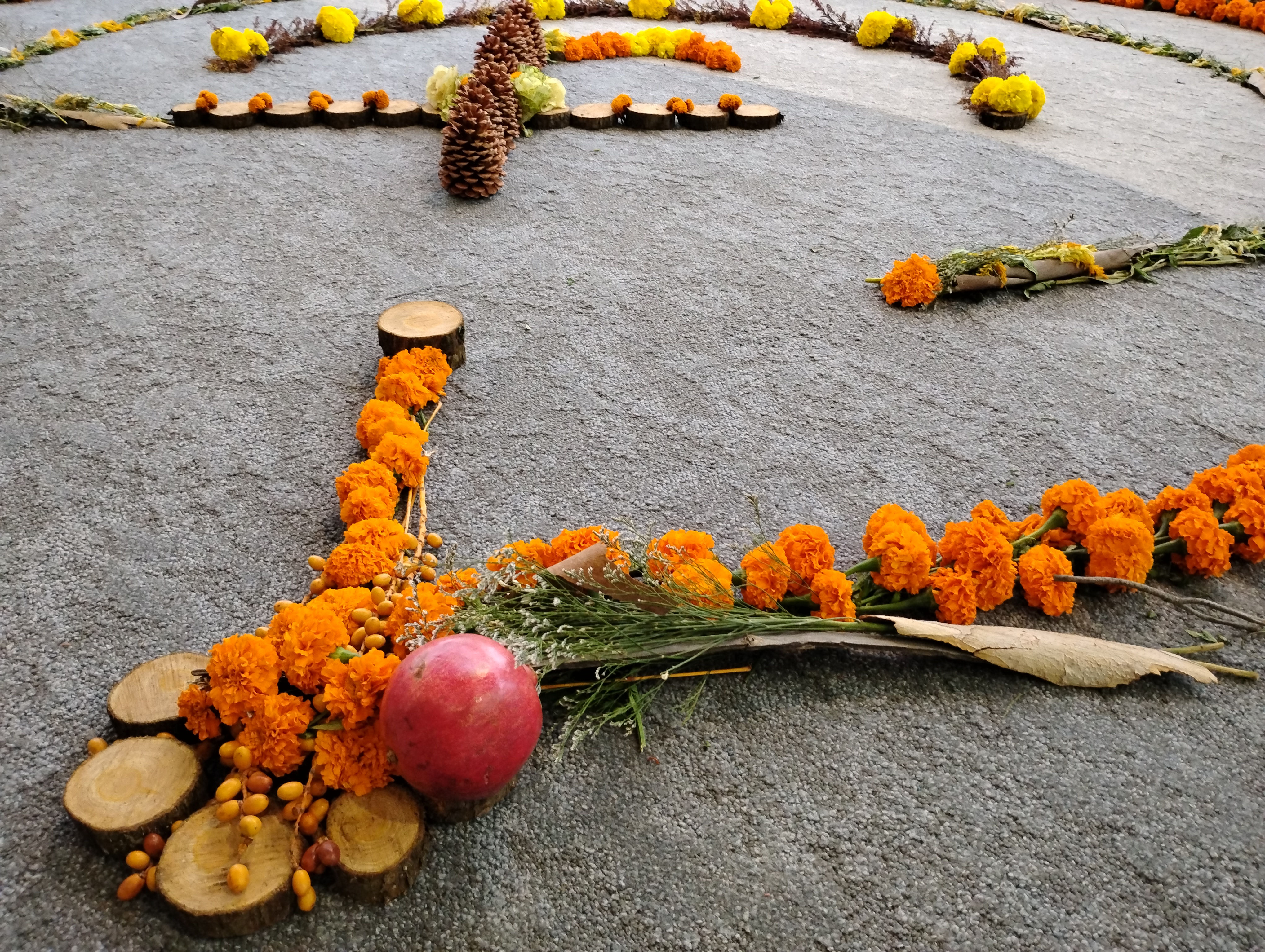
I was excited to continue to a glassed-in room where San Francisco Bay Area doulas Tida Beattie and Soyeon Davis had created a labyrinth of marigolds, pine cones, and plant branches from local flora. They had also created a labyrinth for the End Well conference the day before.

Tida and Soyeon provided directions about setting an intention before entering the labyrinth with suggestions for how to focus on your breath and feelings. They also provided a thoughtful sheet about the rich and diverse history of labyrinths.

I am a huge fan of these precious ladies from a Reimagine on-line meeting years ago and subsequent on-line gatherings about death, dying, and grief in Asian communities. Here below you may see and feel their open, receiving energy. Soyeon is on the left, Tida on the right:

Tida was on the mid-afternoon panel discussion.  She spoke movingly and authentically about how difficult it is to navigate the subject of dying in an Asian family. Also on the panel were African-American cancer survivor Sonya Jackson, and Our House Latina social worker Jenny Rivera-Cruz with Alica Forneret as the moderator. Each of their experiences about navigating serious illness, death, and grief were compelling to listen to and at moments surprisingly humorous.

Photo below of Sonya, Tida, and Jenny on the Time to Pause afternoon panel:

Photo below of Executive Director Alica Forneret (blue and white blouse) as panel moderator with some of the audience:

The AC Care Alliance, a non-profit “faith and health caring community” focuses on the African-American experience yet serves all others. They received me graciously, just as they were packing up.  My thanks to Regional Director Trevino Cochran for offering me a well-conceived, well-written Care Planning Workbook for Advanced Illness Care.

Jasmine Godinez-Gomez had a table with her Art for Grievers.

Mangda Sengvanhpheng, a Laotian-American, shared with me about her culture of care as a death doula since 2019. Her first name translates to light of the full moon. Her name fits her low key, calm and present with you manner.

A short film entitled Curating Grief by London-based filmmaker Jamie Max Lee, shot on location in Lisbon, was screened. Attendee Charlene Lam of http://www.curatinggrief.com is featured in the film. I look forward to viewing the film at another time. A trailer for the film is on Charlene’s website.

Bella Vida Hospice of Signal Hill, CA had a table. They focus on serving the Latino community.

There were many other participants to meet and appreciate.

About 200 authors, chaplains, nurses, caregivers, end-of-life doulas, poets, psychologists, social workers, and anyone interested or involved with cultural differences in end-of-life and grief attended the free event. The atmosphere was healing and supportive, and the fair well-organized and produced.

Several folks who attended End Well stopped by – National End-of-Life Doula Alliance President and Compassion & Choices African American Leadership Council member (AALC) Ashley Johnson from Orlando, Florida; Author/End-of-Life Doula Trainer/End Well speaker Alua Arthur of Los Angeles; SFO Bay Area Author/Hospice Nurse Gabrielle Elise Jimenez, Sarah Chavez of the Order of the Good Death whom I would have liked to have seen again (last time was  in 2019) and many others.

If this gathering returns next year, and I hope it does, I have a prayer for possible Native American participation.

Many thanks to Alica and her equally passionate and engaging Time to Pause team for their attention to details and care. For more info on Alica and Time to Pause please see:

About PAUSE Leadership — PAUSE

Note: The End Well conference, produced since 2019 with immense heart and soul by Dr. Shoshana Ungerleider of San Francisco, is devoted to “making the end of life a part of life.” The conference has included diverse voices since inception. If interested, an edited 5-hour recording of this year’s End Well may be viewed on line at: https://endwellproject.org/live/ .
© Wendy Jane Carrel 2024

Wendy Jane Carrel, MA, is a Spanish-speaking senior care advocate from California. She has travelled Mexico (and Latin America) for several years researching health systems, senior care, and end-of-life care to connect Americans, Canadians, and Europeans with healing options for loved ones. She is a compassionate companion and palliative care liaison, legacy writer, co-founder of Café Mortality Ajijic/now Death Café Ajijic and founding member/speaker of the Beautiful Dying Expo (USA). She is a trauma-informed, gentle End-of-Life Doula (National End-of-Life Doula Alliance proficient), a speaker and published author on subjects related to senior well-being, and serves on the City of West Hollywood’s Older Adult Advisory Board. Wendy’s web site is https://www.WellnessShepherd.com

Assisted Living Mexico, Ecuador Senior Care, Eldercare Abroad, Ex-pats in Mexico, Health & Wellness Mexico, International Retirement, Nursing Homes Mexico, Senior Care Abroad

Finding Eldercare/Senior Care Abroad – Assisted Living, Nursing Care, Memory Care

We live in an aging universe, a universe where older adults live longer than ever before and the need for care is growing.

For centuries we have protected and provided for loved ones from cradle to grave. These acts of reverence, respect, and love still exist and are seen in traditions around the world.

But modern life has shifted from relative stability to burden for many – out-of-the-blue expensive healthcare conditions, a growing number of older adults with chronic diseases/co-morbidities requiring long-term care, fewer folks to work as caregivers, multiple stressors for families overwhelmed with work and caregiving, financial loss, climate change, pandemics, war, forced migration.

Sadly, the reality of aging in the U.S. if you are not independently wealthy requires extra effort, planning, and sacrifice. No matter how much exercise, living with a positive attitude, and attention to healthful lifestyles, you may find yourself with difficult choices due to an unanticipated surprise – do you adjust where you are or imagine alternatives? Staying home is understandably preferable.

Older adults around the globe prefer to Age in Place and make their end-of-life transitions in a community they know and love. Quality of life that is comfortable and familiar is the main objective. This is generally translated to, NOT in a foreign country or anywhere else.

If you have exhausted all avenues of community support at home or in adjacent counties, states, or provinces, and realize care may not be affordable or you may outlive your funds, what are your choices? What if you are a solo ager with no family, spouse, or fallback? What if you must continue to work to support a family and are uncomfortable with the idea of sending mom or dad away for care?

Choosing to move could be a disheartening task. It is a leap into the unknown, no matter how adventurous one is.

One option is to seek care in another country.

There are seven continents on our planet. All but one (Antarctica) provide a form of care for older adults. From Albania to Samoa, unless loved ones are cared for by family, there are in-home support services or residences offering various forms of independent living, assisted living, memory care, nursing care, and/or end-of-life support.

According to Grand View Research, “the global long-term care market size was valued at USD 1.11 trillion in 2023 and is expected to grow at a compound annual growth rate (CAGR) of 6.68% from 2024 to 2030.”

The area with the largest anticipated growth is memory care. Alzheimer’s Disease International reports there are more than 44 million Alzheimer’s patients globally. The number is expected to triple to 135 million by 2050. “If ‘dementia’ was a country it would be the world’s 17th largest economy.” Costs for memory care are exorbitant, especially if the anticipated lifetime of care is 12 years or more.
How do you choose where to go?

Somewhere around 2003 it became evident to me as a person dedicated to older adult healthcare that the future for American boomers, Gen-Xers, Millenials, and their parents would be affected by the rising cost of aging care. With the benefit of a lifetime of travel, foreign study, and work on five continents, it became apparent Americans might begin to seek care in another state or abroad if they could not afford the cost of care at home.

In the last 15 years I have witnessed and assisted more and more Americans, as well as Canadians and some Europeans take a leap of faith and choose south of the U.S. border for retirement and care for reasons of proximity (not for Europeans), weather, cost, and a reputation for thoughtful providers.

According to Lottie, a UK research organization and placement advisor, the best countries for senior care named in order are Norway, Sweden, Switzerland, Germany, Canada, and the U.S. You would need to have residency, be a national, or have funds to pay for care. Factors included in the study were pensions, healthcare systems, care services (assisted living, nursing), social support, and government grants.

The best countries for senior care by continent named by Lottie are:

Africa – South Africa

Asia – Taiwan

Europe – France

Oceania – Australia

North and Central America – Mexico

South America – Ecuador

The Lottie report did not include parameters for the above assessment. France as the best in Europe contradicts the previous Lottie report that Norway leads in senior care.

The below review is based on my research and experience.

What countries do Americans and other nationalities consider for retirement and senior care if looking internationally?

Americans and Canadians favor the Caribbean or Mexico by virtue of proximity, and often for weather. Other places in Latin America are considered, mainly Costa Rica, Ecuador, and Panama. In the last 15 years, the Philippines and Thailand have also been chosen based on cost, weather, and a reputation for attentive care. Malaysia, a new face of senior care in Asia since legislation in 2018, attracts some Americans but mostly Australians, Brits, and folks from other Asian nations. Ireland is sometimes considered when qualifying for Irish citizenship or residency. If you are an EU citizen, you have certain residency rights in Ireland.

Frida mural in expat enclave Ajijic, Jalisco, Mexico

If you have the blessing of universal healthcare (Americans do not) and are a national in Norway or Sweden, you are cared for from birth to burial no matter the level of care you require. Norway, as mentioned above, is considered the best country for older adults by virtue of its healthcare system and life expectancy. I can attest to Sweden based on attending graduate school in Stockholm and experiencing the healthcare system.

If you live in the UK, Portugal or Greece look like warmer options by virtue of proximity and favorable tax breaks, but the situation may be more of a challenge post-Brexit depending on your financial status and language considerations. Many American older adults are finding their way to Portugal, and to Greece if they have Greek heritage. Brits as we know have considered India for retirement and medical care (shades of the film about middle class retirees in The Best Exotic Marigold Hotel), or a British base in the Caribbean.

Since the end of the 19th Century Italians (and some French) looking for affordable options have been traveling to Tunisia, not so far from home. Historically, Tunisia was a Roman imperial colony. Vibrant Italian colonies are found in Tunis, Bizerte, and Sfax. On a recent trip to Italy, I learned some Italians are now traveling to Croatia for lower costs, which is interesting as several “badante” or caregivers in Italy are from Croatia. Here is the post about aging in Italy a favored country for retirement, healthcare, and senior care by Americans of Italian descent and others:

In the Arab world, Kuwait, Oman, and Zanzibar (on the Trucial Coast of Africa but formerly the Sultanate of Oman and an important Arab trading center), countries I know, taking care of your elders is a religious and traditional obligation. Home health caregivers and nurses are de rigueur. There are now palliative care and hospice services.

What countries have dignified elder care at a price point less than that of the U.S.?

As of 2024 more affordable price points may be found in Costa Rica, Cuba (not an option for U.S. citizens), some Caribbean nations, Ecuador, India, Mexico, Panama, the Philippines, and Thailand. Note: prices for care are rising worldwide.

In every country of the world there is quality, supportive elder care and there is sub-standard, disengaged “care”.

Quick overview of points to ponder:

Determine country. Easiest to do when you have travelled to far flung places before. Be advised that dream vacations are not the same as living long periods of time in a new place. A preliminary, exploratory trip is always recommended. In expat destinations there are often introductory seminars for how to navigate the place you have chosen. If your heritage is Irish, Italian, Polish, or other, and you qualify for residency and a second passport, countries of heritage may be in mind.

Healthcare beyond in-home care and assisted living. Access to physicians, hospitals. Learn how the healthcare system works in the country that beckons you. Medical care may cost less and yet be of similar quality or better. Vet your medical team as you would in your own country. What is the role of the assisted living residence if any? Is the residence hands on or does it expect family members to participate in your hospital and rehab care from a distance? If you are a solo ager, consider locating a healthcare coordinator/advocate to keep an eye on your care. Review factors that affect health – weather, elevation, pollution, availability of fresh water and food. Will you be in a flat place safe from falls? What is the standard of care?

Residency requirements. Every country provides information on how to qualify for and achieve residency. Will you be able to live there in the future on your income as prices rise? Embassy and consulate websites plus expat forums on-line provide guidance for navigating residency. Expect a lot of effort on your part. If you do not speak the language, consider hiring a facilitator.

Consider the distance and cost of travel, keeping in mind cost to return home should life change. The longer the distance the harder it is to travel with elder loved ones. Will family be able to visit? On a recent Viva Aerobus flight between Los Angeles and Guadalajara a precious senior in obvious pain was traveling with her mindful son. The flight was three hours. The son held her close. She never complained but you could feel it was not easy.

Corporate or Home-Like Environments. What would be the most compatible environment and style for you or your loved one? What is the owner/administrator’s philosophy of care? Do they have a mission to care for elders? Is income the only objective? Will the residence remain in existence for the life of the resident? Search the Internet and AI. You will read about places, mostly those that are corporate, and not necessarily discover smaller places with no budget for outreach. Consider smaller places, some are gems.

Garden at small assisted living home in Mexico

Consider family moves. I have had the privilege of assisting families who moved with their loved ones. The sons and daughters work digitally and visit mom or dad. For those who are unable to move with loved ones, most homes provide Face Time, Google Meets, or Zoom visits.

Safety and happiness. Is the residence secure? How will the residence assist with the transition? Any move is stressful, especially for older adults. It takes three to six months to adapt to a new environment. Not everyone transitions well, some not at all. In my experience, a well-traveled person who has an affinity for adventure or a certain culture, has as easier time. If the loved one has dementia, places in nature with gardens, room to walk, the energy of light, and a high level of activity and engagement encourage positive outcomes. What will the level of socialization be? Are there other expats who would be compatible company? Some expat havens and faith communities have volunteers, usually retirees, who visit homes and keep track of brethren. Is the food fresh, does the home offer diets suitable for diabetes or other illnesses? What are the standards of care? How is staff trained, how many staff per resident?

Quality of life and engagement lead to comfort, better health, and general contentedness.

Local culture. How are older adults viewed by the society and government? Is English a second language and is there experienced, trained staff who speak some English? Will you or your loved one be comfortable living among locals or being examined by a doctor who may not speak English? What is the country like compared to what is familiar to you? What might be missing? Some countries group residents who only have physical disabilities with those who have dementia.

Palliative care and hospice. Will the residence and local doctors accept and respect your wishes? What are local procedures/traditions for treating pain? How is end of life treated? Is there 24/7 attention and vigiling? If you feel close to death, will you be able to return to your home country to die if that is your wish?

Expat forums. There are innumerable expat forums on the Internet, some offer basic guidance about what to expect in the country of choice. Be advised, however, that even with good intentions, information may contain other cultural biases and not necessarily be in alignment with your personal needs, perceptions, and standards.

Summary:

If aging and healthcare options at home become limited, or you realize you may outlive your funds, one option is to look abroad.

Seeking eldercare beyond your own borders is a daunting task and may feel painful.  If you have had the privilege of international travel, languages, and on-the-ground experiences that provide you with a level of psychological as well as financial safety and comfort, you may do well. There are also many who have chosen care abroad, never travelled far before, who end up feeling pampered and content. Choosing care near an expat retirement community may bring peace of mind and could provide back-up support and socialization.

Exploring and planning ahead make a difference in your outcomes.

Mission based care (not meant to be interpreted as religious) in smaller residences is often appealing, especially when administrators and staff demonstrate compassionate care daily. Large corporate facilities often require an extra layer of vigilance on the part of families in all countries, so providing an advocate/weekly visitor is helpful if affordable.

There is no perfect place, but there is excellent care to be found in every country.

Research well, make lists, assess your needs, and locate a place that aligns with your preferences.

Abundant blessings for whatever journey you or your loved ones choose.

© Wendy Jane Carrel, 2024

Wendy Jane Carrel, MA, is an older adult health care advocate, advisor, and consultant from California. She has conducted due diligence for senior living and retirement on five continents and is passionate about supporting families and their elders with solutions. She provides informed, attentive, compassionate guidance and curated options for Ecuador, Mexico, and other destinations both domestic and abroad. She is a speaker and published author on subjects related to older adult well-being. Wendy’s web site is https://www.WellnessShepherd.com 

Resources:

Long-Term Care Market Size, Share & Growth Report, 2030 (grandviewresearch.com)

https://www.alzint.org/about/dementia-facts-figures

https://lottie.org/care-guides/which-country-has-the-best-elderly-care/

https://expatsi.com/communities/retirees/best-countries-for-seniors-end-of-life-care/

https://www.youtube.com/watch?v=l4vUGKcASUU  PBS program How Long-Term Care is Burdening Middle Class Americans

https://myhometouch.com/articles/caring-for-an-elderly-parent-from-abroad – wise advice for sons and daughters of parents who live abroad

https://ceoworld.biz/2024/04/08/worlds-best-and-worst-countries-for-older-people-to-live-in-2024/

Death and Dying, Death Cafe Los Angeles, Family Caregiving, Heather Fink, Long-Term Illness

Catastrophic Long-Term Illness, Death and Love – An Immersive Evening About Caregiving with Comedienne/Filmmaker Heather Fink’s Quicksand

Place:  LA’s Fringe Festival, June 2024

Heather Fink is a comedienne/filmmaker/storyteller who bravely shares her thoughts and feelings about long-term illness, caregiving, death, loss (income, career, family), and love in a live performance.

The title Quicksand telegraphs Heather’s theme, most of all its weight. She offers an authentic, energetic, engaging, and quirky memoir with relatable universal situations.

The well-paced performance (with backdrop slide show of photos, a stuffed dummy father, and surprise pop-up) entertains and reels us in as we relate to the family crisis – her father’s stroke – the toll on her father unable to speak but four words, the exhaustion of her self-sacrificing Dutch mother, and loss for Heather’s efforts to advance her career. Heather shares, “we lived with a constant sea of emergencies.” Thirteen years of emergencies.

Meet Heather introducing her show on TikTok at:

The material is fresh and raw. Heather’s father Stephen passed away exactly a year ago around the time she celebrated another birthday.

Heather’s journey is one of endurance and faith.

A fine audience experience demonstrating the value of everyday love and remembrance.

Quicksand messages:

Family illness and ultimately death affect the life trajectory of all involved.

Learn how to recognize a stroke!! (outlined on the show’s program)

There are 53 million unpaid caregivers in the U.S., they represent the backbone of long-term care. Most families, such as Heather’s, cannot afford to hire in-home caregivers.

Heather’s Angst and Outcome:

“I’m 43 and I have nothing to show for it” she cries. As we learn, though she may not yet see, she has everything to show for it – being present for both parents with love and support, plus the experience of a dark night of the soul that ultimately led to her current mission – meaningful discussions about caregiving, illness, and death.

Heather is now an advocate for stroke awareness, advance care planning, and talking about death, especially at Death Cafes.

Notes:

The Hollywood Fringe Festival, a community arts event, is held over three weekends every June at various small theaters in LA. It was founded in 2010 with 130 shows. The term originated with the first Edinburgh Fringe Festival which featured unique, non-traditional performances in 1947.

Death Café. Bernard Crettaz, a Swiss sociologist, created the first Café Mortels. His concept of meeting over tea and cake revolutionized how we speak about death and dying. Jon Underwood, who founded Death Café in the UK, made a trip to meet his inspiration Bernard Crettaz. Underwood attended the last Café Mortels in Lausanne, October 31, 2014. Jon died suddenly in 2017 at the age of 43. His mother and sister, plus two women in the U.S., keep the project going. There are more than 18,000 Death Cafes in 90 countries around the world.

There is a thoughtful Death Café in Los Angeles hosted by Elizabeth Gill Lui, a photographer/artist/author and death doula, at LA’s Philosophical Research Society.

A June 12, 2024 article in the Los Angeles Times features Elizabeth’s Death Café. The photo includes the author of this post (wearing a mask) and to her right and the reader’s left, charming Heather Fink who created the solo piece Quicksand. Link to article is in the Resources section below.

© Wendy Jane Carrel, 2024

Wendy Jane Carrel, MA, is a Spanish-speaking senior care advocate from California. She has travelled Mexico for several years researching health systems, senior care, and end-of-life care to connect Americans, Canadians, and Europeans with healing options for loved ones. She is a compassionate companion and palliative care liaison, legacy writer, co-founder of Café Mortality Ajijic/now Death Café Ajijic and founding member/speaker of the Beautiful Dying Expo (USA). She is a trauma-informed, gentle End-of-Life Doula (National End-of-Life Doula Alliance proficient), and a speaker and published author on subjects related to senior well-being. Wendy’s web site is https://www.WellnessShepherd.com

Resources:

https://www.caregiver.org/resource/caregiver-statistics-demographics/ .

https://www.aarp.org/caregiving/financial-legal/info-2023/unpaid-caregivers-provide-billions-in-care.html

https://deathcafe.com Death Café

https://www.prs.org/events.html Philosophical Research Society, LA

https://www.latimes.com/lifestyle/story/2024-06-12/death-cafes-los-angeles-grieving-discussion-group#  Sorry, there is a paywall